Quantum Control for Research
Power Your Research from Design to Publication
Researchers in quantum computing face challenges at every step of their progress: From the initial design of a lab or a sample, to pushing the limits of their measurements and publishing novel results. If you are looking for a specific application or specific product, be sure to read our application pages and product pages, listed below.
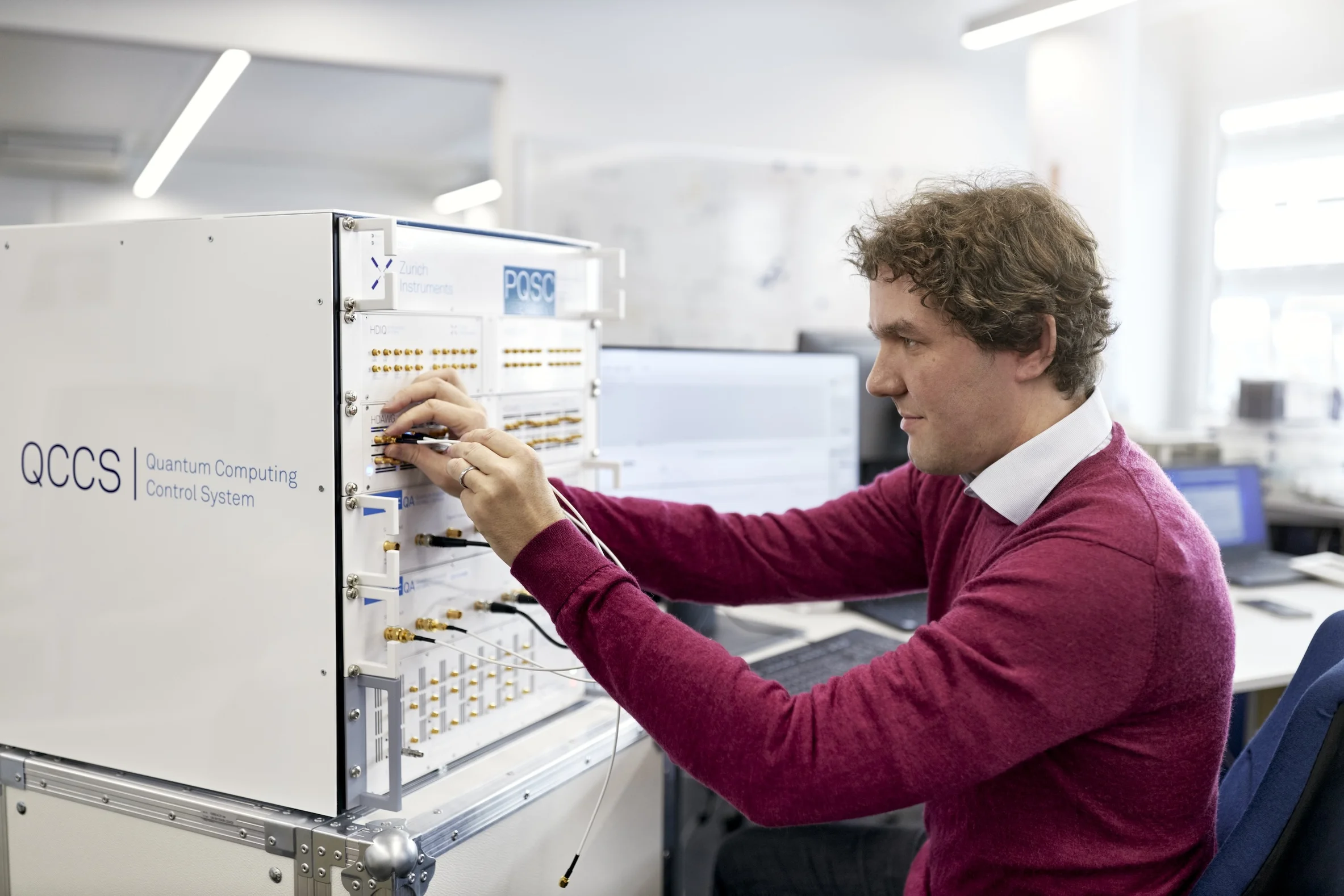
The Challenges Facing Researchers in Quantum Technology
Hardware issues
Quantum experiments are derailed by everything from unstable qubits, to instrument noise on the control lines or other environmental noise, to setup downtimes for maintenance.
Software complexities
An ever-changing landscape of software tools and packages makes coding a new quantum stack feel exhausting. The only thing worse is having to debug legacy code written by a postdoc who left years ago.
Changing group members
PhD students graduate; postdocs move on to start their own labs. This leads to knowledge gaps in the team and can overwhelm them with how much there is still to understand about the physics, instrumentation, and codebase.
Publication pressures
After months of toiling in the lab, and then months fighting to publish those results, your paper is finally out. And then the slow, uncertain grant-writing cycle to fund the next project and the next publication starts again.
Eliminate Noise from Your Control Eelctronics

In quantum experiments, even minor noise can compromise measurement quality. Instruments with subpar noise characteristics can limit your research by reducing qubit gate fidelity or qubit sensitivity. Our hardware is engineered to excel in quantum experiments, ensuring that your measurements reach their full potential. With low output noise, robust synchronization, and gapless waveform playback, you can trust in consistent, high-quality results. Furthermore, together with Rohde & Schwarz, we offer a broad range of test and measurement equipment for helping to diagnose both expected and unexpected signals in your labs.
Disentangle Your Code
Developing and maintaining software stacks distract from actually running experiments and can cause your research to fall behind. LabOne Q is designed to streamline your coding as much as possible: It is intuitive, open-source, and offers interfaces to other software packages, such as OpenQASM. With extensive code examples and ready-to-go experiment implementations, LabOne Q not only simplifies software development but also reduces experiment runtime. If you are thinking about switching to LabOne Q, our experts can help you get up and running with minimal downtime.
Lean on Our Expertise

Knowledge often gets lost when research group members pass the baton, and training new group members takes time. Our Application Scientists have PhDs in quantum technology and hands-on lab experience. They don't just offer support; they actively help your team set up, optimize, and troubleshoot experiments so that you can focus on results, not re-learning the basics.
Publish High-Impact Research
In the race of quantum technology research, slow funding cycles and demanding grant timelines make unproven solutions risky: The choices you make today influence your research for years. Zurich Instruments has a long-standing history of supporting leading researchers in their ambitious goals, as shown by numerous high-impact publications in quantum technology. Our commitment to instrumentation excellence ensures that your research is built on a strong foundation.

Discover our Products for Research in Quantum Technology


Creating the Nodes of the Quantum Internet: A Journey Through Quantum Memories and Entanglement Distribution

“My research focuses on quantum memories based on crystals doped with rare-earth ions. These crystals … build an elementary node of a quantum network, allowing us to distribute entanglement over large distances and forming the basis of a future quantum internet.”
A Simple Path to Fast Graphene Qubit Readout: QPC Sensor in a Resonant Circuit
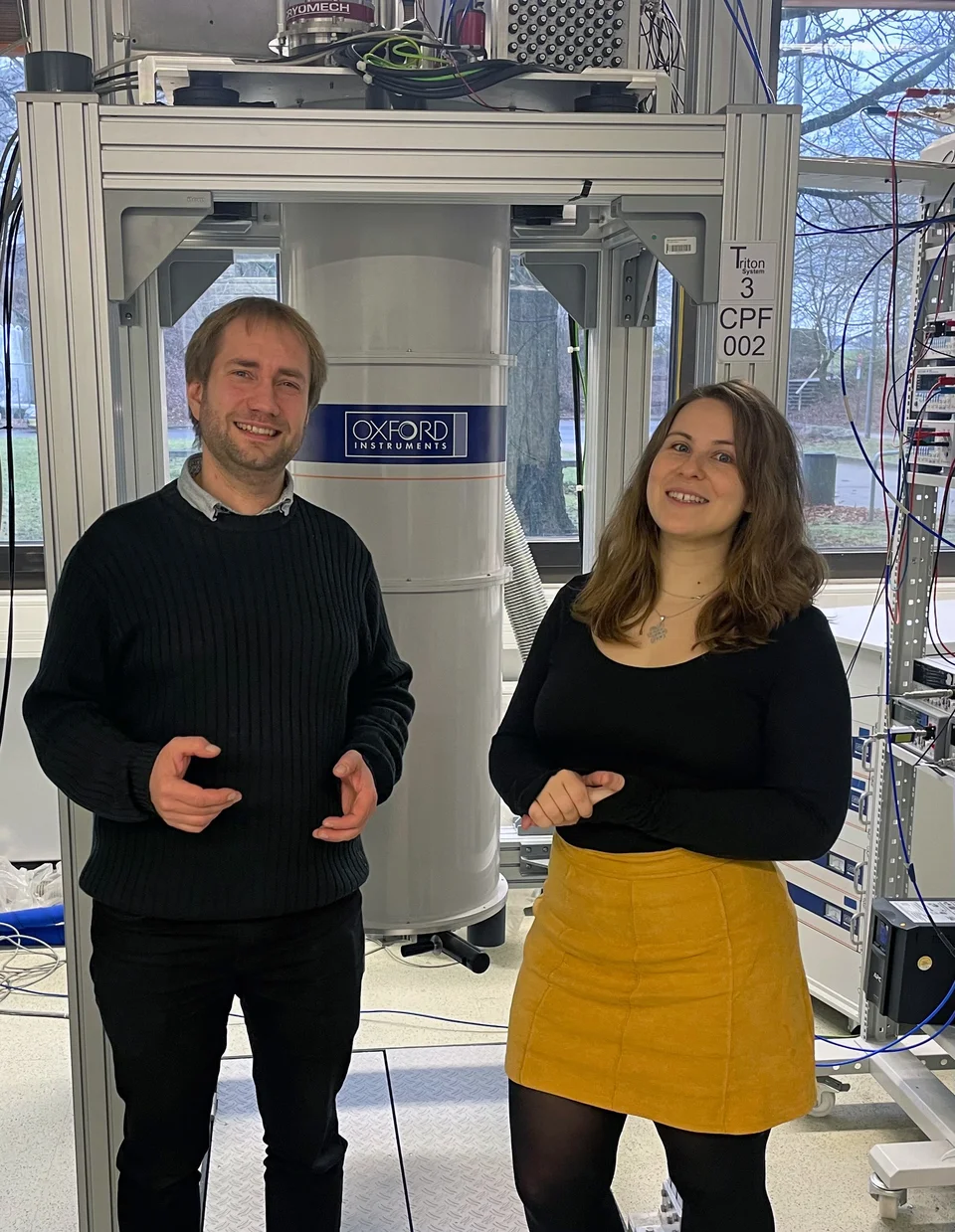
“The Zurich Instruments 600 MHz UHFLI Lock-in Amplifier plays a central role in this setup […]. It helps significantly reduce the complexity of the experimental setup compared to home-built analog demodulation circuits.”
From Bulky Optics to On-Chip Integration: A Portable Diamond-NV Magnetic Field Camera
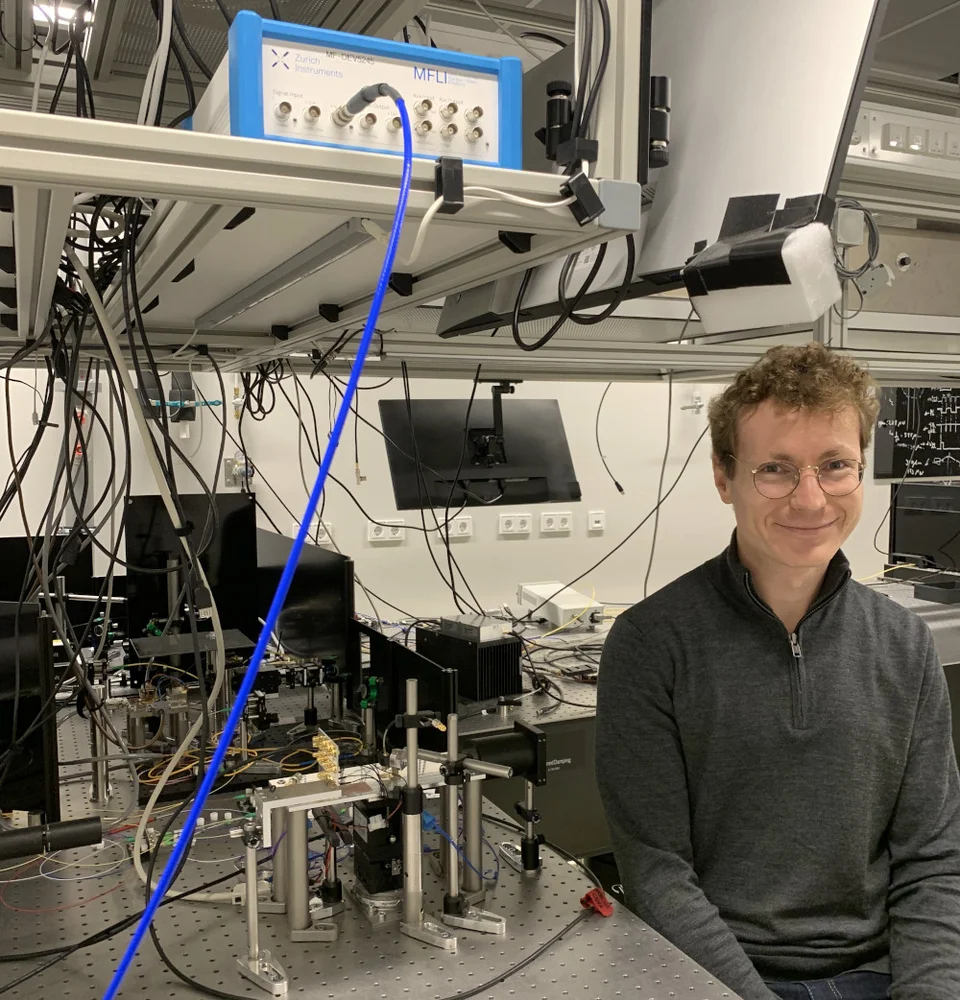
“...our camera resolves the magnetic field gradient [...]. These results establish that robust, compact, chip‑integrated diamond‑NV sensors can perform magnetic field imaging without moving components or extensive microscope optics.”
From Molecular Spins to Fault-Tolerant Qudits: Dr. Junjie Liu’s Path to Scalable Quantum Memory

“My research focuses on [...] quantum spin systems at the (sub)nanometre scale [...] and their applications in spintronics. I aim to explore the interplay between spin and electrical/optical degrees of freedom [...] to develop novel quantum technologies.”
Interview: Kevin Morse
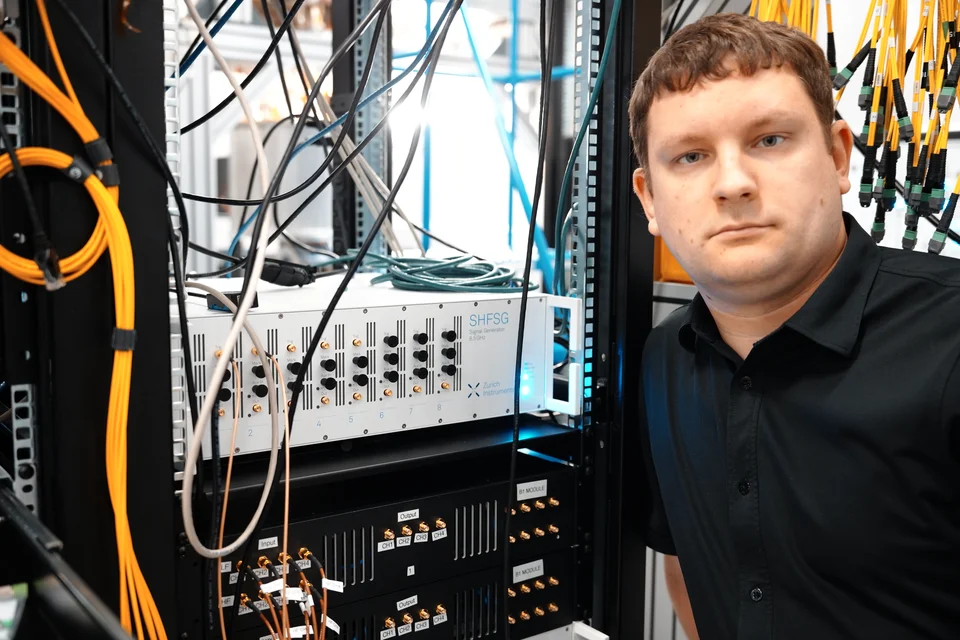
“We are building large-scale, fault-tolerant, distributed quantum computers. Our architecture is unique; based on the T centre in silicon. T centre qubits in silicon leverage the advantages of both spin qubits and telecom photons.”
Interview: John Nichol

“Spin qubits have two important advantages related to the goals of quantum computing - and the potential that these bring to the field excites me about working on the topic.”
Interview: Stefan Filipp

“For our research roadmap, it's important to work with a company that thinks along the same directions as we do, namely – what is needed for high-fidelity and scalable devices?”
Interview: Prof. Yonuk Chong

“The Zurich Instruments QCCS made it possible to set up and start the measurement of qubits very quickly. In particular, the generation of precise high-frequency signals using double-superheterodyne frequency conversion significantly reduced the calibration burden in the qubit readout and control measurement setup.”
Interview: Mr. Nathan Lacroix and Dr. Sebastian Krinner
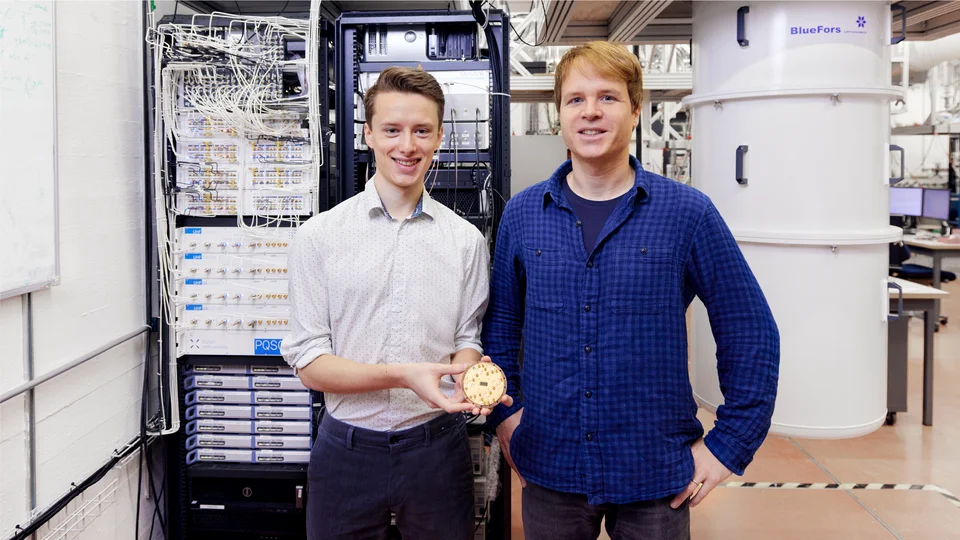
“We use Zurich Instruments' equipment for low-noise and high-resolution control signal generation and for readout with FPGA-based fast signal processing. If we had to build control electronics on a large scale with similar characteristics, that would distract us from our core research activities.”