LabOne Q. All Quantum in One.
LabOne Q is the software framework for quantum computing that accelerates the progress in your laboratory.
- Spend time where it matters. Your experiments.
- Program large setups in Python as a single machine.
- Transform complex quantum circuits into simple code.
- Track every detail down to the last sample.
- Optimize your setup for a high duty cycle.
- Scale up with drop-in code replacement.
- Increase your throughput with a streamlined interface.
Designed for Your Experiments on the Most Advanced Control Electronics
With LabOne Q you can express experiments in a language that connects the digital world of quantum gates with the analog world of signals. The Python based, high-level interface provides intuitive tools for specifying multi-channel signals with precise timing control.
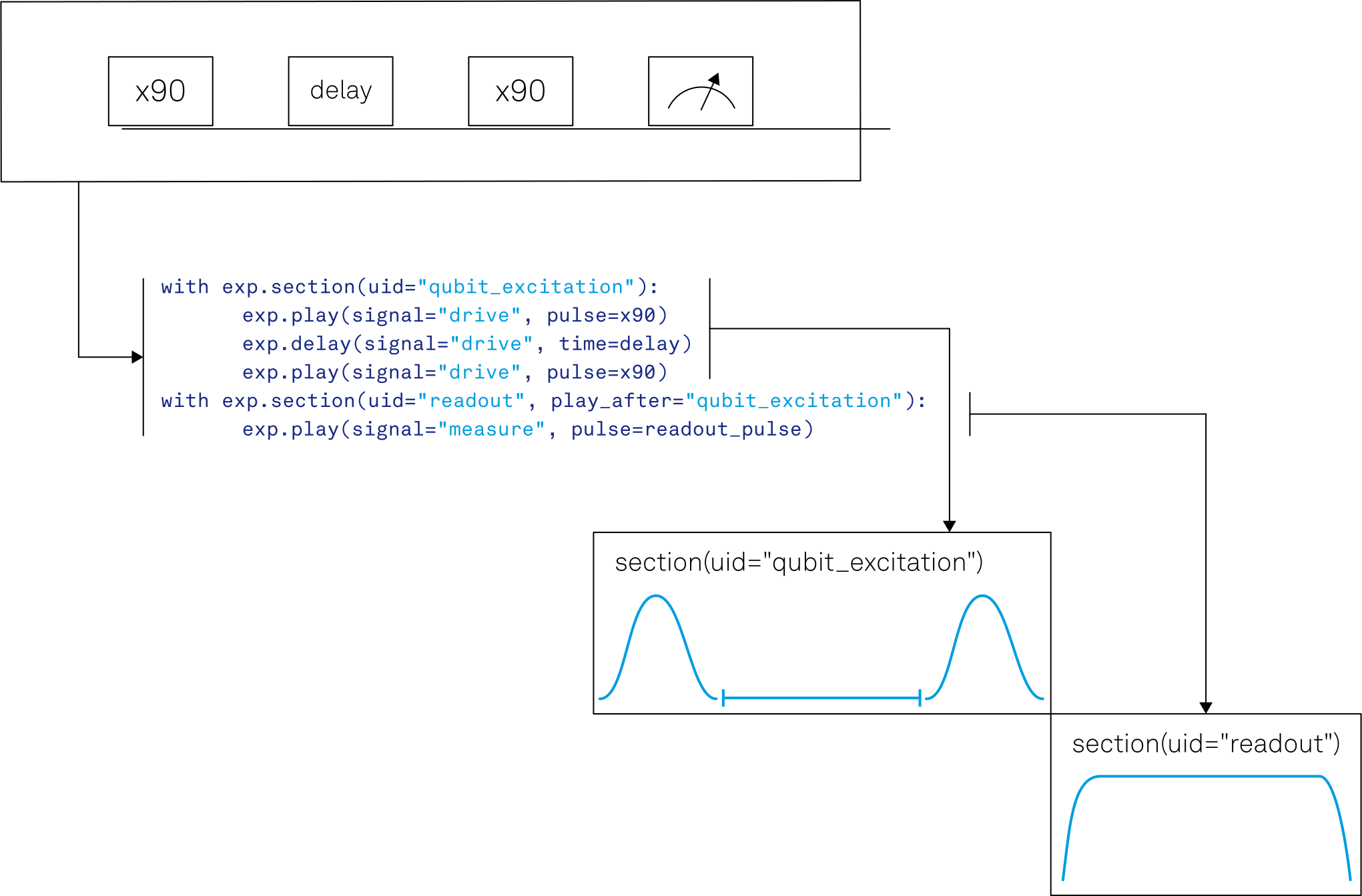
LabOne Q makes it easy to reuse code. Sections allow you to group pulse patterns across signal lines. They support looping, sweeping, and averaging structures to express all levels of timing consistently, from sample-precise pulse-level control up to the arrangement of multi-experiment protocols.
LabOne Q streamlines and automates time-consuming tasks such as optimizing instrument settings, generating and uploading waveforms, and synchronizing pulses between multiple instruments. Even with this control and measurement automation, users still have complete low-level access to the instruments. Setup details and instrument settings are accessible through a single line of code.
LabOne Q also provides browser-based tools for visualization of the experimental sequence and pulses before execution, giving a simplified overview of complex experiments, even with hundreds of pulses.
Supporting High Duty Cycles
LabOne Q enables users to get the most out of their setups by helping them extend the time the experiment is providing results. With an optimal duty cycle a quantum computer spends the highest possible computing time on the quantum processing unit. LabOne Q supports the user to maximize computational duty cycles by minimizing communication overhead, optimizing control instructions, pipelining and queuing experiments with a separation in offline and online functionality, and with the interfaces for automation.
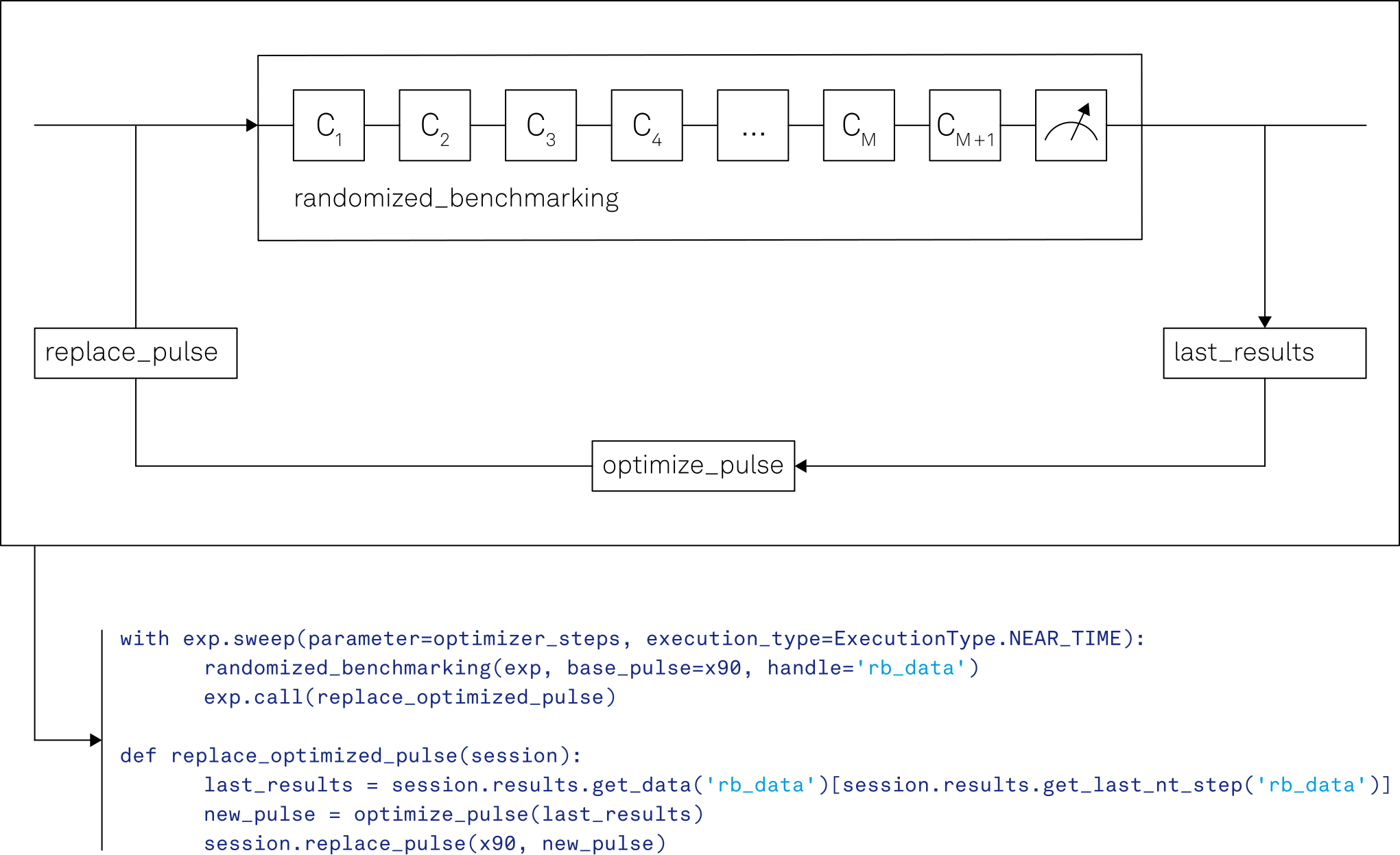
Additionally, experiments have a clear distinction between real-time execution, when the instruments execute instructions and gather data autonomously, and near-time instructions, when communication with an outside process is necessary. For example, when tuning up a quantum gate with optimal control, real-time calibration sequences are interleaved with optimization steps, where intermediate measurement results are used to optimally calibrate the required gate pulse.
Scale Up Your QPU without Scaling Up Your Effort
LabOne Q includes a powerful DAG-based automation framework that streamlines QPU calibration and eliminates manual tune-up bottlenecks by turning mundane repetitive tasks into automated, reusable workflows. Your tune-up time will be reduced by orders of magnitude, freeing you up to focus on discovery rather than configuration. Built to scale with growing QPUs, LabOne Q Automation transforms parameter handling into a one-time investment, which ensures predictable performance as system complexity increases. Its flexible architecture adapts easily to evolving research goals and enables fast iteration and long-term innovation. Scale your qubit control with confidence and accelerate your path from setup to results.

Ready for Your Application Workflow
The LabOne Q Applications Library enables you to quickly ramp up your qubit experiments and focus on the physics and results that interest you. With this framework, you get the tools to describe your measurements in terms of quantum devices and their operations.
The Applications Library covers all parts of a tune-up workflow: experiment definition, measurement, analysis and plotting, and physics parameter updates. The framework can be extended and adapted to include your automated tune-up workflows, as well as supporting manual or mixed workflows.
Common types of superconducting qubits and gate operations are readily available and easily customizable to minimize your development time. By ensuring the most efficient usage of the Quantum Computing Control System and promoting best practices in a straightforward way, the Application Libraries ensure optimal uptime and a sustainable performance.