HDAWG
750 MHz 임의 파형 발생기
주요특징
- 2.4 GSa/s, 16 비트, 750 MHz 신호 대역폭
- 5 Vpp 최대 진폭
- 최대 144 개의 출력 채널까지 확장 가능
- 고 채널 밀도(channel density)
- 50 ns 미만의 트리거-출력 지연
- 다중 주파수 디지털 변조
- LabOne® AWG 시퀀서 및 컴파일러
- LabOne®, LabOne Q, 혹은 APIs 를 통한 제어
Variants
가격정보
CHF 19,400
Pricing shown is ex-works Zurich and only valid for the selected region
Any questions? 문의하기 for pricing information
취리히인스트루먼트(Zurich Instruments) HDAWG 다채널 임의 파형 발생기는 해당 장비클래스에서 최고 수준의 높은 채널 밀도를 제공하며, 최대 750MHz 대역폭의 고급 신호 생성용으로 설계되었습니다. HDAWG는 16비트 수직 해상도의 DC 커플링 단일 엔드 아날로그 출력 채널 4개 또는 8개를 제공합니다. 출력 스위칭은 대역폭을 극대화하고 노이즈 성능이 우수한 직접 모드와 신호 진폭을 최대 5Vpp로 끌어올리는 증폭 모드 간에 선택할 수 있습니다. 최대 18개의 HDAWG에 대한 타이밍 동기화는 취리히인스트루먼트 PQSC를 통해 지원됩니다.
LabOne 은 임의 파형 발생기의 성능과 유연성 그리고 함수 발생기의 접근성을 결합한 최첨단 프로그래밍 개념을 제공합니다. LabOne 사용자 인터페이스, LabOne Q 소프트웨어 프레임워크 그리고 Python, C, MATLAB® , LabVIEW™ 및 .NET 용 API 선택을 통해 측정을 자동화하고 기존 제어 환경에 빠르게 통합할 수 있습니다.
양자 컴퓨터 응용기술
- 단일 및 다중 큐비트-게이트 작업으로 큐비트의 일관된 조작
- 사전 보정을 통한 플럭스 및 게이트 전압 펄스 생성
- 실시간, 낮은 지연율 그리고 에러 보정을 위한 글로벌 피드백
지원하는 큐빗 타입
- 초전도 큐빗 ( 트랜스몬, 플럭소 등)
- 스핀 큐빗
- Color 센터 ( NV, SiV 등)
기타 주요 응용기술
- NMR 및 EPR 분광기
- Radar 및 Lidar
- 반도체 테스
효율적인 AWG 프로그래밍
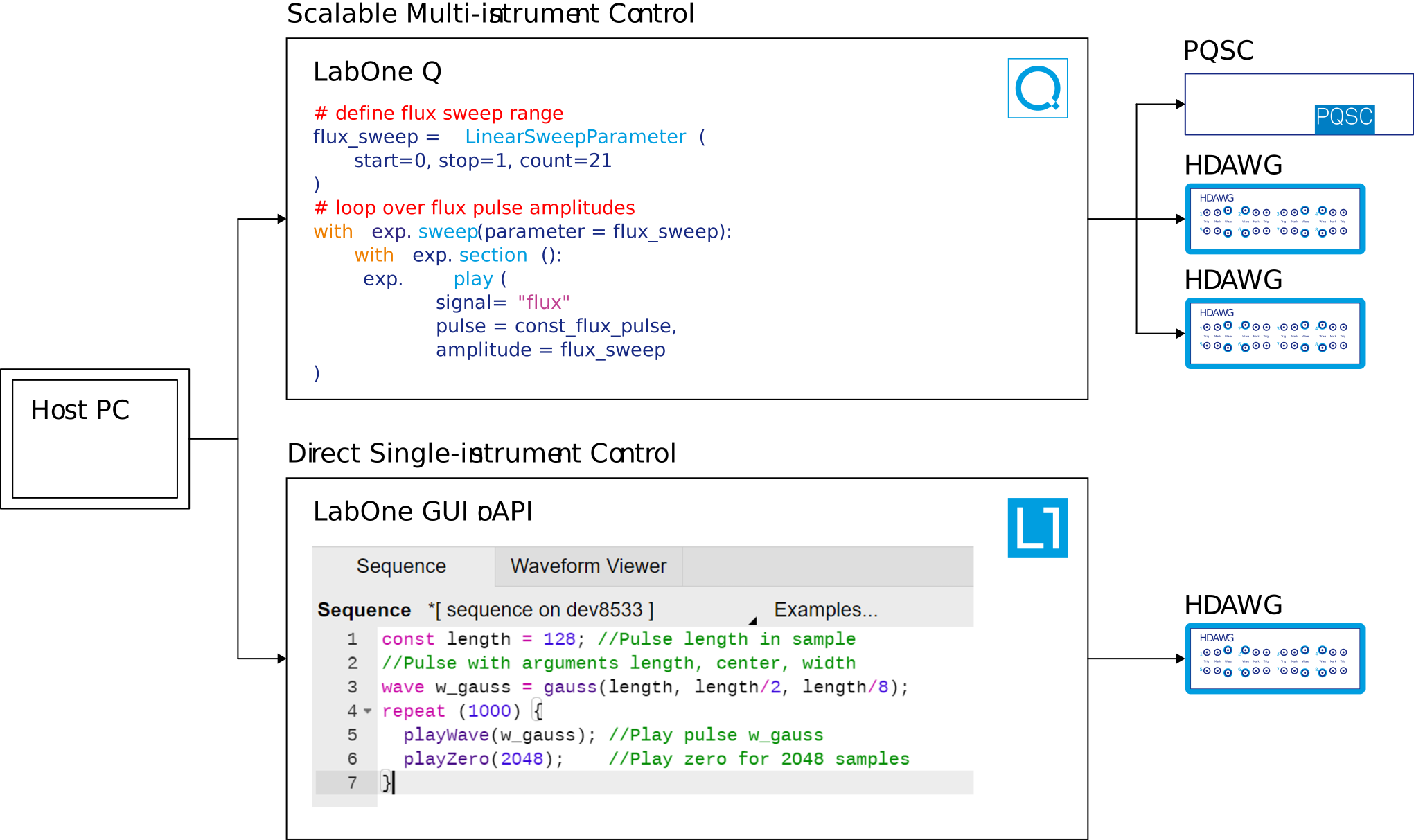
HDAWG는 주요 사용 사례에 맞게 조정된 두 가지 시퀀스 프로그래밍 인터페이스를 제공합니다: 양자 컴퓨팅의 다중 기기 셋업을 위한 LabOne Q와 양자 기술 및 엔지니어링의 단일 기기 셋업을 위한 LabOne AWG Sequencer.
LabOne AWG Sequencer는 파형 생성, 시퀀싱 및 실시간 제어 명령을 하나의 프로그래밍 언어로 결합합니다. 이 접근 방식은 복잡한 타이밍 및 제어 흐름이 필요한 경우에도 신호 생성을 단순화합니다. LabOne AWG Sequencer는 LabOne 그래픽 사용자 인터페이스에 내장되어 있으며 Python, MATLAB®, LabVIEW 및 .NET의 API를 통해서도 액세스할 수 있습니다.
LabOne Q는 Python의 펄스 시퀀싱을 포함하는 양자 컴퓨팅을 위한 전체 측정 프레임워크를 제공합니다. 동기화, 다양한 종류의 여러 계측기 프로그래밍 및 계측기 설정 최적화를 자동화합니다. 따라서 LabOne Q는 실험 제어에 대한 확장 가능한 접근 방식을 제공합니다.
발진기, 변조 및 위상 제어
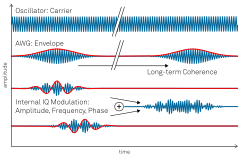
HDAWG에는 프로그래밍된 AWG 엔벨로프 신호와 독립적으로 신호의 정현파 반송파를 생성하는 디지털 발진기가 장착되어 있습니다. 즉, 매우 빠른 파형 업로드와 여러 펄스에서 정확한 위상 일관성으로 긴 신호를 생성 할 수 있습니다. 또는 정적 파형에 기록될 반송파 주파수 및 위상을 자유롭게 조정하고 쓸 수 있습니다.
HDAWG-MF Multi-Frequency 옵션은 발진기 수를 늘리고 주파수 및 위상 변조, 주파수 다중화 또는 위상 사이클링을위한 완전한 디지털 I / Q 변조를 가능하게 합니다.
확장가능한 시스템
With MDS, multiple HDAWGs can be operated much as a single multi-channel AWG:
- Operate all instruments from a single user interface or API
- Absolute synchronization of all output channels
- Phase locking of all instrument clocks
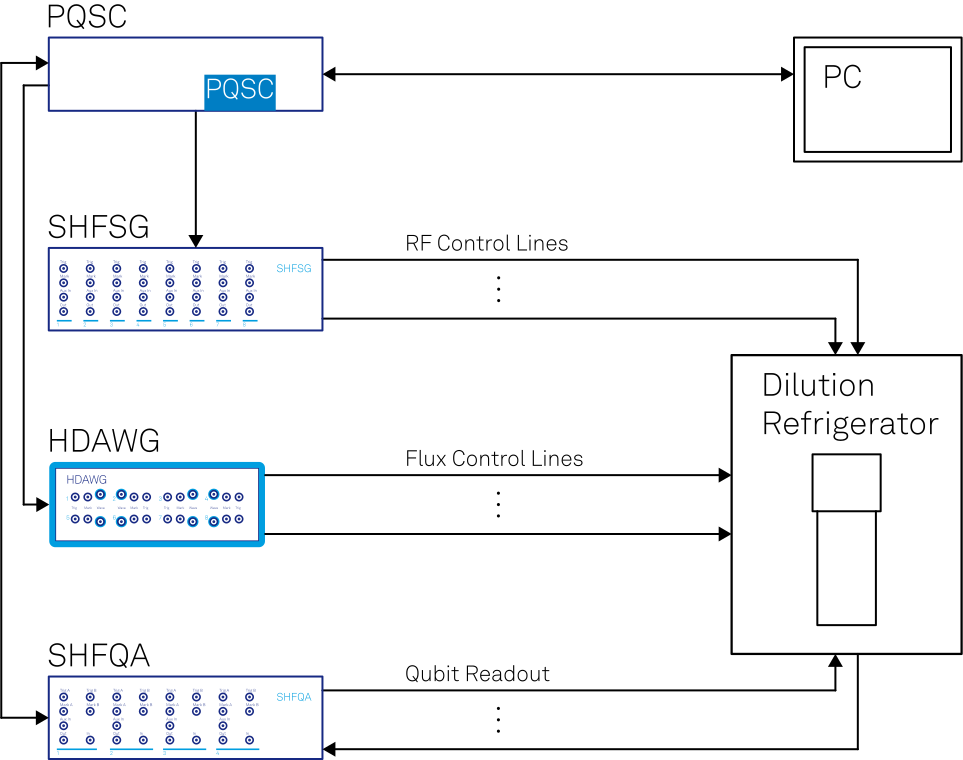
When multiple instruments are used, LabOne takes care of distributing your master sequence program across all instruments. An automated trigger exchange protocol ensures synchronized playback timing. When combining the HDAWG with the Zurich Instruments PQSC, a system with up to 144 fully synchronized AWG channels can be realized. This system can be combined with measurement channels provided by the Zurich Instruments UHFQA, SHFQA, or SHFQC.
저 지연 트리거링 및 시퀀스 분기
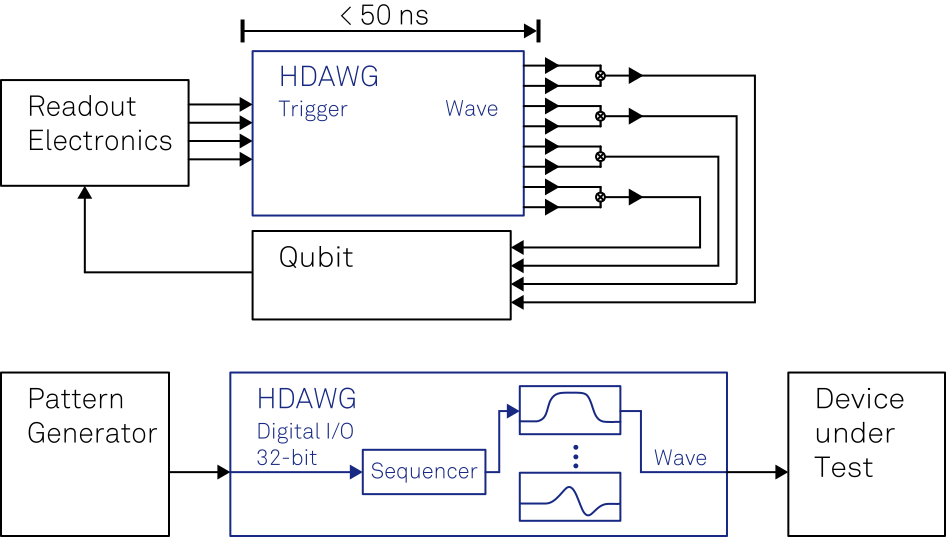
Thanks to the low-latency design, the HDAWG is able to generate its first sample on the signal output less than 50 ns after detecting an external trigger on one of the trigger inputs on the front panel. This is essential for feedback experiments in quantum computing where device properties are short-lived, and each nanosecond that is saved improves the experimental outcome tremendously. The 4 or 8 output channels of the instrument can be grouped into units of 2 or 4. Each of these groups can then be triggered individually, which increases flexibility when distributing signals to separate parts of a setup.
In order to generate signals with a high complexity and real-time control, the HDAWG is able to select from up to 1024 pre-stored waveforms in a programmable memory based on the bit-pattern applied to its 32-bit digital input. These could represent a digital modulation pattern, a device-specific test waveform, or a multi-qubit state readout result.
임의 파형 발생기
| Channels | 4 (HDAWG4 model) 8 (HDAWG8 model) |
| Vertical resolution | 16 bits |
| Waveform memory per channel | 64 MSa; 500 MSa (with HDAWG-ME option) |
| Sequence length | 8,192 |
| Waveform granularity | 16 samples |
| Minimum waveform length | 32 samples |
| Sequencer clock frequency | Sampling rate divided by 8 |
| Sequencer instructions (playback) | Play waveform (single or multi-channel), play waveform segment (start sample index and segment length), play waveform from the library (DIO input state), interrupt waveform playback |
| Sequencer instructions (other) | Wait constant, wait for trigger, set/get trigger state, set/get DIO state, integer variable operations (add, subtract, logical operations), change oscillator frequency/phase (real-time), change other instrument setting (non real-time) |
| Sequencer control structures | Repeat (1 to 223-1 or infinite), conditional branch (multi-branch) |
파형 신호 출력
| Connector type | SMA (front panel, single-ended) |
| Output impedance | 50 Ω |
| Output coupling | DC |
| Output modes | Amplified, direct |
| Output range | ±0.1 V to ±2.5 V (amplified, into 50 Ω) ±0.4 V (direct) |
| Output level accuracy | ±(1% of setting + 5 mVpp) (amplified, into 50 Ω) |
| Output level resolution | < 0.1 mV |
| Offset voltage | 0.5 × peak voltage, max. ±1.25 V (amplified, into 50 Ω) 0 V (direct) |
| Offset voltage accuracy | ±(1% of setting + 5 mV) |
| Phase noise | < -135 dBc/Hz (amplified, 1 Vpp, 100 MHz, offset 10 kHz) < -148 dBc/Hz (amplified, 1 Vpp, 100 MHz, offset 1 MHz) < -135 dBc/Hz (direct, 0.5 Vpp, 100 MHz, offset 10 kHz) < -148 dBc/Hz (direct, 0.5 Vpp, 100 MHz, offset 1 MHz) |
| Wave output period jitter | 3 ps RMS (square wave, 150 MHz) |
| Voltage noise above 200 kHz |
35 nV/√Hz (amplified, ±2.5 V range, into high impedance) 12 nV/√Hz (direct, into high impedance) |
| RMS voltage noise (integrated from 100 Hz to 600 MHz) |
320 µVrms (amplified, ±2.5 V range, into 50 Ω) 100 µVrms (direct, into 50 Ω) |
시간 및 주파수 도메인 특성
| Wave output bandwidth (-3dB, after correcting for sin(x)/x roll-off) | 0 - 300 MHz (amplified, ±2.5 V range) 0 - 750 MHz (direct) |
| Sampling rate | 100 MSa/s to 2.4 GSa/s |
| Sampling rate divider | 20 to 213 |
| Internal sampling clock resolution | 7 digits |
| Rise time (20% to 80%) | 450 ps (0.2 V step, amplified, ±0.4 V range) 800 ps (1 V step, amplified, ±2.5 V range) 1100 ps (5 V step, amplified, ±2.5 V range) 300 ps (0.8 V step, direct) 550 ps (1 V step, amplified, ±1.5V range) |
| Overshoot | < 1% |
| Trigger delay to output | < 50 ns (within one channel pair 1&2, 2&4, 5&6, 7&8 using playWaveDigTrigger sequencer instruction) < 180 ns (using waitDigTrigger sequencer instruction) |
| Skew between channels | < 200 ps |
| Skew control range | 10 ns |
| Skew control resolution | <10 ps (with HDAWG-SKW option) <0.42 ns or 1 sample clock period (without HDAWG-SKW option) |
마커 및 기타 출력
| Marker outputs | 1 per channel, SMA (front panel), 2 marker bits per waveform |
| Marker output impedance | 50 Ω |
| Marker output rise/fall time | 300 ps (20/80%) |
| Marker output period jitter | 60 ps p-p (square wave, 100 MHz) |
| Marker output skew control | -23...30 ns (range, at max. sampling rate) ~10 ps (resolution, at max. sampling rate, depends on absolute setting) |
| Sampling clock output | SMA on back panel |
| Sampling clock output amplitude | 0.8 Vpp (2.4 GHz into 50 Ω) 2.0 Vpp (1.0 GHz into 50 Ω) |
| Reference clock output | SMA on back panel |
| Reference clock output impedance | 50 Ω, AC coupled |
| Reference clock output amplitude | 1 Vpp (100 MHz into 50 Ω) |
| Reference clock output frequency | 100 MHz (internal reference mode) 10 / 100 MHz (external reference mode) |
| Reference clock output jitter | 260 fs RMS, derived from integrated phase noise measurement (12 kHz to 200 MHz offset frequency) |
입력
| Trigger inputs | 1 per channel, SMA (front panel) |
| Trigger input impedance | 50 Ω / 1 kΩ |
| Trigger input voltage range | ±5 V (50 Ω) ±10 V (1 kΩ) |
| Trigger input threshold range | ±5 V (50 Ω) ±10 V (1 kΩ) |
| Trigger input threshold resolution | < 0.4 mV |
| Trigger input threshold hysteresis | > 60 mV |
| Trigger input min. pulse width | 5 ns |
| Trigger input max. operating frequency | 300 MHz |
| Sampling clock input | SMA (back panel) |
| Reference clock input | SMA (back panel) |
| Reference clock input impedance | 50 Ω, AC coupled |
| Reference clock input frequency | 10 / 100 MHz |
| Reference clock input amplitude | -4 dBm to +13 dBm |
발진기 및 클록
| Internal clock type | TXCO |
| Internal clock aging | ±0.8 ppm/year |
| Internal clock short-term stability | 0.0001 ppm (1 s) |
| Internal clock initial accuracy | ±1 ppm |
| Internal clock temperature stability | ±0..3 ppm (–20°C to +70°C) |
| Internal clock phase noise | -105 dBc/Hz (offset 100 Hz) -125 dBc/Hz (offset 1 kHz) |
최대 수치
| Damage threshold Wave | -1.2 V / +1.2 V (direct) -6 V / +6 V (amplified) |
| Damage threshold Mark | -0.7 / +4 V |
| Damage threshold Trig | -11 V / +11 V (1 kΩ input impedance) -6 V / +6 V (50 Ω input impedance) |
| Damage threshold Reference Clk In | -4 V / +4 V (DC) +13.5 dBm (AC, with DC offset 0 V) |
| Damage threshold Reference Clk Out | -4 V / +4 V (DC) |
| Damage threshold Sample Clk In | -4 V / +4 V (DC) +13.5 dBm (AC, with DC offset 0 V) |
| Damage threshold Sample Clk Out | -4 V / +4 V (DC) |
| Damage threshold MDS In/Out | -0.7 / +4 V |
| Damage threshold DIO In/Out | -0.7 / +4 V (default configuration 3.3 V CMOS/TTL) |
연결성 및 기타
| Digital IO (DIO) | VHDCI 68 pin female connector, 32-bit, configurable as input or output, 3.3 V TTL |
| Host connection | LAN/Ethernet, 1 Gbit/s USB 3.0, 5 Gbit/s |
| PC memory requirements | 4 GB+ |
| PC CPU requirements | Compatibility with SSE2 instruction set required. Examples: AMD K8 (Athlon 64, Sempron 64, Turion 64, etc.), AMD Phenom, Intel Pentium 4, Xeon, Celeron, Celeron D, Pentium M, Celeron M, Core, Core 2, Core i5, Core i7, Core i3, Atom |
| Operating system | See LabOne Compatibility |
일반
| Dimensions | 43.0 × 23.2 × 10.2 cm 16.9 × 9.2 × 4.0 inch, suited for 19 inch rack |
| Weight | 4.6 kg; 10.2 lbs |
| Power supply AC line | 100−240 V (±10%), 50/60 Hz |
| Operating temperature | +5 °C to +40 °C |
| Operating environment | IEC61010, indoor location, installation category II, pollution degree 2 |
| Operating altitude | Up to 2000 m |
HDAWG Q & A
예, 4 채널 구성과 8 채널 구성 (HDAWG4 및 HDAWG8)을 사용할 수 있습니다. HDAWG4는 HDAWG8로 업그레이드 할 수 없으며 두 모델의 업그레이드 옵션은 호환되지 않습니다. 즉, HDAWG8에 HDAWG4-PC(실시간 사전 보정) 옵션을 설치할 수 없으며 그 반대의 경우도 마찬가지입니다.
예, 이 기기는 USB 3.0 또는 1 GbE를 통해 연결된 컴퓨터에서 작동합니다. 컴퓨터는 파형 및 시퀀스 데이터를 AWG에 업로드합니다. AWG가 시작되면, 신호를 자율적으로 생성하고 더 이상 컴퓨터에 엄격하게 의존하지 않습니다.
LabOne 소프트웨어는 다운로드 센터에서 무료로 다운받아 사용할 수 있으며, 업데이트버전은 정기적으로 발표됩니다. LabOne은 기기 펌웨어를 업데이트하는 단일클릭 기능도 제공합니다.
+41 44 515 0410으로 전화하거나, 또는 연락처 세부 정보와 선호하는 시간대를 빠른 메모로 보내주십시오. 온라인 데모를 예약하여 귀하의 요구 사항을 논의하고, 그것이 HDAWG 기기 기능과 일치하는지 확인합니다.
HDAWG에는 채널당 2 개의 마커가 있습니다 (총 8/16 개). 채널당 2 개의 마커 중 하나는 전면 패널 (SMA)에 있고 다른 하나는 후면 패널 (32 비트 DIO)에 있습니다. 마커를 사용해도 출력의 16 비트 해상도가 감소하지 않습니다.
Yes, the DIO port can be configured as either input or output in groups of eight bits. They can be controlled via the "setDIO" instruction. As a consequence, the timing resolution of toggling these bits is 150 MHz (6.66 ns), with a minimum of 13.3 ns of time in-between changes. At the moment, the DIO port can be controlled only when the HDAWG is programmed directly in SeqC. The DIO port is functional only when the HDAWG is configured to run at the maximum sample rate of 2.4 GSa/s.
HDAWG는 다른 AWG의 단순 트리거 모드를 뛰어 넘는 트리거링 가능성을 제공합니다. 그리고 HDAWG-CNT 펄스 카운터 옵션으로 펄스 카운팅 기능을 제공합니다. HDAWG는 채널 쌍 (1 & 2, 3 & 4, 5 & 6, 7 & 8)을 완전히 독립적인 AWG 장치로 프로그래밍하고 실행할 수 있는 모드를 제공합니다. 특히 개별적으로 트리거 될 수 있습니다. 또한 단일 시퀀스 프로그램은 여러 트리거 입력 (예 : 라인 및 프레임 트리거 입력)을 수신 할 수 있으며, 트리거 상태를 시퀀스 분기를 위한 입력으로 사용할 수 있습니다.
예, MDS (Multi-Device Synchronization) 는 최대 8 개의 HDAWG의 신호 타이밍을 자동으로 정렬합니다. 또한 단일 인터페이스 및 시퀀스 프로그램을 사용하여 HDAWG 스택의 모든 채널을 제어 할 수 있습니다. 동기화는 계측기 후면 패널의 MDS 커넥터를 통한 트리거 신호의 양방향 교환으로 가능합니다.
모든 사용자는 구매 장소에 관계없이 Zurich Instruments로 부터 지원을 받습니다. 가능한 경우 현지 판매 파트너도 현지 언어로 1 단계 지원을 제공합니다. 상세 지원, 기기 교정 또는 서비스에 대해서는, 지원 페이지를 확인하십시오.
LabOne AWG 시퀀서는 C에서 파생된 고급 언어 (때때로 seqC라고도 함)를 사용합니다. 이 언어는 읽고 쓰기가 자연스럽습니다. 따라서 시퀀스를 기계 명령 테이블로 쌓는 전통적인 접근 방식에 비해, 무슨 일이 일어나고 있는지 훨씬 더 잘 이해할 수 있습니다. LabOne 시퀀서 언어는 통합 파형 생성 도구와 함께 제공됩니다. 이 작업을 별도의 파형 생성 도구 또는 타사 소프트웨어로 분할하는 대신, 시퀀스 편집기에서 필요한 파형을 간단히 정의 할 수 있습니다. 코드 완성 및 디버깅 메시지와 같은 기능은 신규 사용자를 위한 빠르고 효율적인 학습을 보장합니다.
시간이 걸리는 파형 업로드는 훨씬 더 빨리 수행될 수 있으며, 정현파 반송파가 있는 신호를 사용할 때, 전체 시퀀스 정의 및 변형이 훨씬 간단해 집니다. 이는 진폭 변조가 반송파를 프로그래밍된 파형과 독립적으로 만들기 때문입니다. 캐리어 매개 변수 (주파수, 위상, 진폭, 오프셋)는 마우스 클릭 몇 번으로 조정할 수 있습니다.
패턴 생성의 유연성을 높입니다. 사용자 레지스터는 가변 지연을 용이하게하고, 특정 파형을 선택하기위한 인덱스 역할을하거나, DIO 인터페이스의 출력 값을 변경합니다. 사용자 인터페이스에서 수동으로 변경하거나 자동 스윕을 수행 할 수 있습니다.
예. 시퀀스 분기를 포함하려면, LabOne 시퀀스 프로그램에서 "if"문을 사용하십시오.
일반적인 파형 (Blackman, Gauss, chirp, sine, square, sinc, DRAG 등)은 시퀀서 명령으로 가능합니다. 또한 파형을 추가, 곱하기, 자르기, 연결, 크기 조정, 그리고 루프 반복을 사용하여, 체계적인 일련의 파형을 생성 할 수 있습니다. 또한 사용자 인터페이스에서 CSV 파일을 끌어서 놓는 방식으로 자체 파형 데이터를 가져올 수도 있습니다.
각 장비에는 국가 별 전원 케이블, USB 3.0 케이블, 1 GbE 케이블 및 빠른 시작 안내서 인쇄본이 포함되어 있습니다.
HDAWG는 AM을 쉽게 지원합니다. HDAWG-MF 다중 주파수 옵션은 내부적으로 추가된 2 개의 quadrature 채널을 기반으로 quadrature 변조를 활성화합니다. 이 기술을 사용하면 FM, PM 및 DSB를 포함하는 임의의 변조 방식을 구현할 수 있습니다.
MATLAB®, LabVIEW®, Python, .NET 또는 C 소프트웨어를 사용하는 경우, LabOne API 와의 통합이 간단합니다. 또한 LabOne은 명령 로그 기능 덕분에, 특정 기기 설정에 적합한 API 명령을 찾을 수 있도록 도와줍니다.
HDAWG는 표준 트리거 입력 및 출력 기능을 제공하여, 둘 이상의 계측기 신호 생성을 동기화합니다.
아니오, HDAWG는 아날로그 신호 입력이 없으며 순수한 신호 생성 기기입니다. 단, HDAWG-CNT 옵션과 함께 제공되는 펄스 카운팅 기능은 별도.
CSV (쉼표로 구분 된 값) 파일 형식의 파형 데이터는 LabOne의 끌어서 놓기(drag-and-drop)를 통해 HDAWG에 업로드 할 수 있습니다.