Zurich Instruments Quantum Technologies Newsletter - Edition Q3/2021
Welcome to the Q3/2021 Quantum Technologies newsletter!
In this edition of the Quantum Technologies newsletter, our application scientists share their knowledge about magnetometry with ensembles of NV centers, quantum error correction with real-time feedback, and efficient generation of dynamic pulses for solid-state qubit operation. We also spoke with Andreas Pauly, Executive Vice President of the Test and Measurement Division at Rohde & Schwarz, about what the future may hold for Zurich Instruments and Rohde & Schwarz. If you missed the news in July, read more about Zurich Instruments' new owner.
Knowledge Bits
Application Page: Magnetometry with ensembles of NV centers
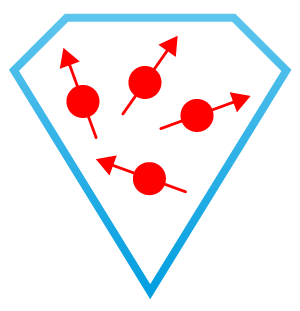
Ensembles of nitrogen vacancy (NV) centers in diamond are a promising candidate for many sensing applications, including wide-field and vector magnetometry. This application page by Mark Kasperczyk presents some of the requirements and the challenges that must be taken into account when optimizing the sensitivity of the NV ensemble measurements. Mark also looks into how the MFLI Lock-in Amplifier can help overcome the considered challenges.
Blog Post: Bell-state stabilization of superconducting qubits
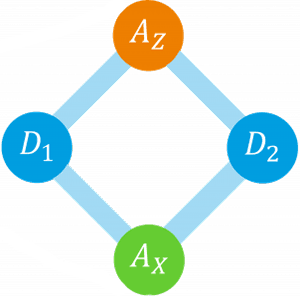
Bell-state stabilization with real-time feedback is key to the implementation of the surface code, one of the most promising quantum error correction codes for large-scale quantum computers. Stabilized Bell states are also an essential resource for other applications such as super-dense coding, quantum teleportation and quantum cryptography. In this blog post, Bahadir Dönmez discusses how to protect Bell states from errors using the Zurich Instruments UHFQA, HDAWG and PQSC. He performs simultaneous bit- and phase-parity checks by measuring two ancilla qubits and combines these operations with conditional real-time feedback on the data qubits to stabilize the considered Bell state.
Blog Post: Efficient generation of dynamic pulses
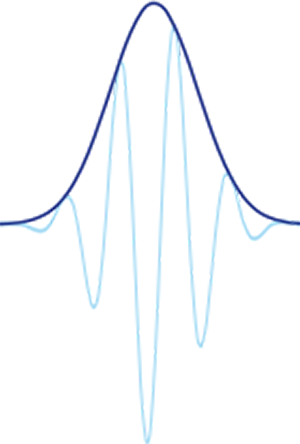
Solid-state qubits are typically characterized by and operated through a series of very short pulses. For high-fidelity control it is necessary to generate many such sequences of pulses with extremely accurate timing. In this blog post, Andrea Corna shows how to use the advanced feature set of the HDAWG Arbitrary Waveform Generator to generate efficiently simple and complex sequences. Their parameters can be adjusted dynamically to guarantee an efficient workflow as well as to realise closed-loop feedback experiments.
Interview: Andreas Pauly, Rohde & Schwarz

What is your background and how did you get to work for Rohde & Schwarz?
After studying electrical engineering and communication technology at the Technical University of Kaiserslautern in Germany, I joined Rohde & Schwarz in April 1996. I started as a software development engineer and designed solutions for 2G to 3G in signal generators. In July 2003, I took over my first management position as the Director of Baseband R&D for Signal Generators. After successfully leading several core developments such as the R&S®SMW Vector Signal Generator, I took over the role of Vice President Signal Generators and Power Meters in July 2015. In this position, I focused on expanding the product portfolio of Rohde & Schwarz in the microwave domain and on getting prepared for 5G. Since July 2017 I have been leading the Test and Measurement Division, and I serve as Executive Vice President and Member of the Executive Board of Rohde & Schwarz.
What are some of the most memorable moments in your career at Rohde & Schwarz up to now?
For me, it is always important to start with the understanding of the customer's application and measurement tasks. Without a clear picture of the requirements, there is a limited chance to develop the right solution for the problem.
An example that comes to my mind is that of customers who build radiofrequency (RF) amplifiers and want to measure the frequency response of their amplifier. In ideal circumstances, the signal generator that serves as a source for the amplifier has an extremely flat frequency response. In this ideal scenario, the customer would only see the influence of the amplifier in the output frequency response. However, customers previously had to correct for the influence of the signal generator in the measured frequency response of the amplifier by measuring the frequency response of the signal generator itself for each considered frequency and power level. This procedure was cumbersome and time-consuming. When we developed the R&S®SMW Vector Signal Generator, we were aware of this challenge with RF amplifiers. We came up with a solution where the frequency response of the generator is measured in real time and is automatically compensated for. With this functionality, customers get a very clean signal from the generator even when varying the frequency or the power level. Consequently, they save a lot of time as they characterize their amplifier. I remember the time when we had a demo tour for important customers working on the design and manufacturing of such RF components – it was maybe a year before the official product launch. When we showed this new functionality, I saw the interest in our customers' eyes. In fact, many customers said, "Please leave the device here right away so I can start working with it – it doesn't matter if it's just a prototype." Receiving this kind of enthusiastic customer feedback is incredibly motivating.
What are you most excited about now that Zurich Instruments is a Rohde & Schwarz company?
Zurich Instruments and Rohde & Schwarz are both centered on innovation. The engineers at Zurich instruments and Rohde & Schwarz who have already met immediately came up with ideas on how to work together and combine the brains and expertise of the two companies.
At Rohde & Schwarz we focus on growth markets and on challenging customer problems that we can tackle with unique and innovative solutions. One of these growth markets is quantum computing. Along with its lock-in amplifiers and impedance analyzers, Zurich Instruments offers brilliant solutions for controlling and measuring quantum processors and is a strong node in the network of actors leading this field. This type of complex quantum computing setup has to be characterized and calibrated to achieve optimal performance. That's where you need highly precise test and measurement equipment such as signal generators, vector network analyzers and oscilloscopes. And this is a stronghold of Rohde & Schwarz. Bringing the two companies together, we will provide excellent solutions for our customers.
What is an example of a recent Rohde & Schwarz solution that is especially powerful in your view?
Higher bandwidths become more and more important. In this context, we are in a leading technical position thanks to the very large bandwidth of the R&S®FSW Signal and Spectrum Analyzer.
The R&S®FSW is able to cover an 8.3 GHz internal analysis bandwidth at a frequency of up to 85 GHz and beyond. This is needed for wide-band satellites such as those used for New Space projects as well as for 6G, for example.
What is an important aspect that will shape the test and measurement market in the upcoming years?
Understanding what customers need at an early stage and what functionalities they will require is going to be key. To identify successful solutions for challenges that are often at the cutting edge of what is physically possible, it will be crucial to develop our own integrated components (e.g., ASICs or RF components). Rohde & Schwarz already has this capability.
Can you provide a couple of examples where Rohde & Schwarz technology impacts every-day life?
Our mission statement is "to ensure a safer and connected world". We drive innovation for mobile communications, to the point that every mobile phone has a close encounter with R&S test and measurement equipment during its development, production or service. Another example is that of our security scanner QPS: thanks to our microwave imaging technology, we help guarantee safe and comfortable airport security checks.
How do you like to spend your time when you don't work?
I like travelling and exploring the world – both culturally and culinarily. As travelling is pretty restricted at the moment, I have been experimenting with cooking international dishes to bring at least a part of the world back home.
News
LabOne 21.08 released

The high-performance data processing and real-time visualization capabilities offered by the LabOne® software guarantee efficient and reliable measurements. We have just released the latest version of LabOne (21.08), which includes built-in firmware updates for all components of our Quantum Computing Control System (QCCS). Here are some of the highlights of LabOne 21.08 that are especially relevant for applications in quantum technologies:
- Full support for the SHFSG Signal Generator.
- External mixer calibration through complex modulation in the HDAWG Arbitrary Waveform Generator.
- Python API utilities and examples for the SHFQA Quantum Analyzer available on our GitHub repository.
- Support of Linux and macOS on ARM64 and Apple M1 processors.
Company & Community

We would like to thank all applicants who submitted entries for the 2021 call: it is great to see the continued popularity of our Student Travel Grants! Congratulations to this year's winners, who will be able to spend their individual prizes of 1'500 CHF on conference fees, textbooks or online courses:
- Letizia Catalini (Niels Bohr Institute, University of Copenhagen, Denmark), Modeling and observation of nonlinear damping in dissipation-diluted nanomechanical resonators, Phys. Rev. Lett. 126, 174101 (2021). Featured instrument: HF2LI Lock-in Amplifier.
- Darpan Verma (The Ohio State University, USA), Local electric field measurement in GaN diodes by exciton Franz–Keldysh photocurrent spectroscopy, Appl. Phys. Lett. 116, 202102 (2020). Featured instrument: HF2LI Lock-in Amplifier.
- Tian Tian (University of Science and Technology of China, China), Dynamic observation of topological soliton states in a programmable nanomechanical lattice, Nano Lett. 21, 1025-1031 (2021). Featured instrument: HF2LI Lock-in Amplifier.
Recent publications featuring the MFLI and the HDAWG
- Tebbenjohanns, F., Mattana, M.L., Rossi, M., Frimmer, M. & Novotny, L. Quantum control of a nanoparticle optically levitated in cryogenic free space. Nature 595, 378–382 (2021).
- Xie, T. et al. Beating the standard quantum limit under ambient conditions with solid-state spins. Sci. Adv. 7 : eabg9204 (2021).