Boxcar Averager Option
Caractéristiques principales
- 2 boxcar averaging units
- Input selectable between Voltage or Current Input
- Up to 50/200 MHz repetition rate
- Zero acquisition dead time
- Baseline suppression and differential measurements
- Up to 1 million averaging periods
Prix
Contactez-nous for pricing information
The VHF-BOX option adds two 50/200 MHz boxcar averager units to the VHFLI Lock-in Amplifier, increasing the measurement speed and signal-to-noise ratio (SNR) for applications that use non-sinusoidal or low duty-cycle waveforms. In contrast to using a digitizer or an oscilloscope, the measurement results from a boxcar averager are streamed continuously in the digital domain and as analog signals with user-defined offset and scaling factors.
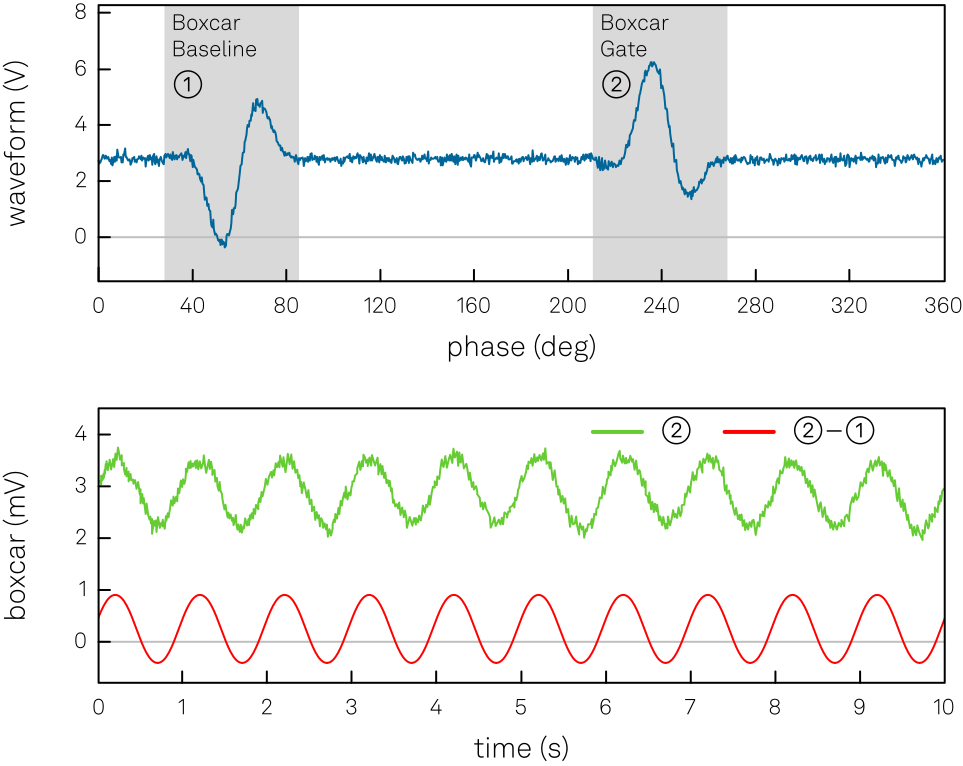
A boxcar measurement is easily set up thanks to the LabOne® user interface: the boxcar gate start and width can be set by visualizing the input signal directly on the Scope or Sweeper. A second baseline window can be set to reduce baseline fluctuations and enable differential measurements. To achieve the best trade-off between measurement speed and SNR, the result can be averaged over consecutive periods between 1 and 1 million times.
Lock-in vs boxcar
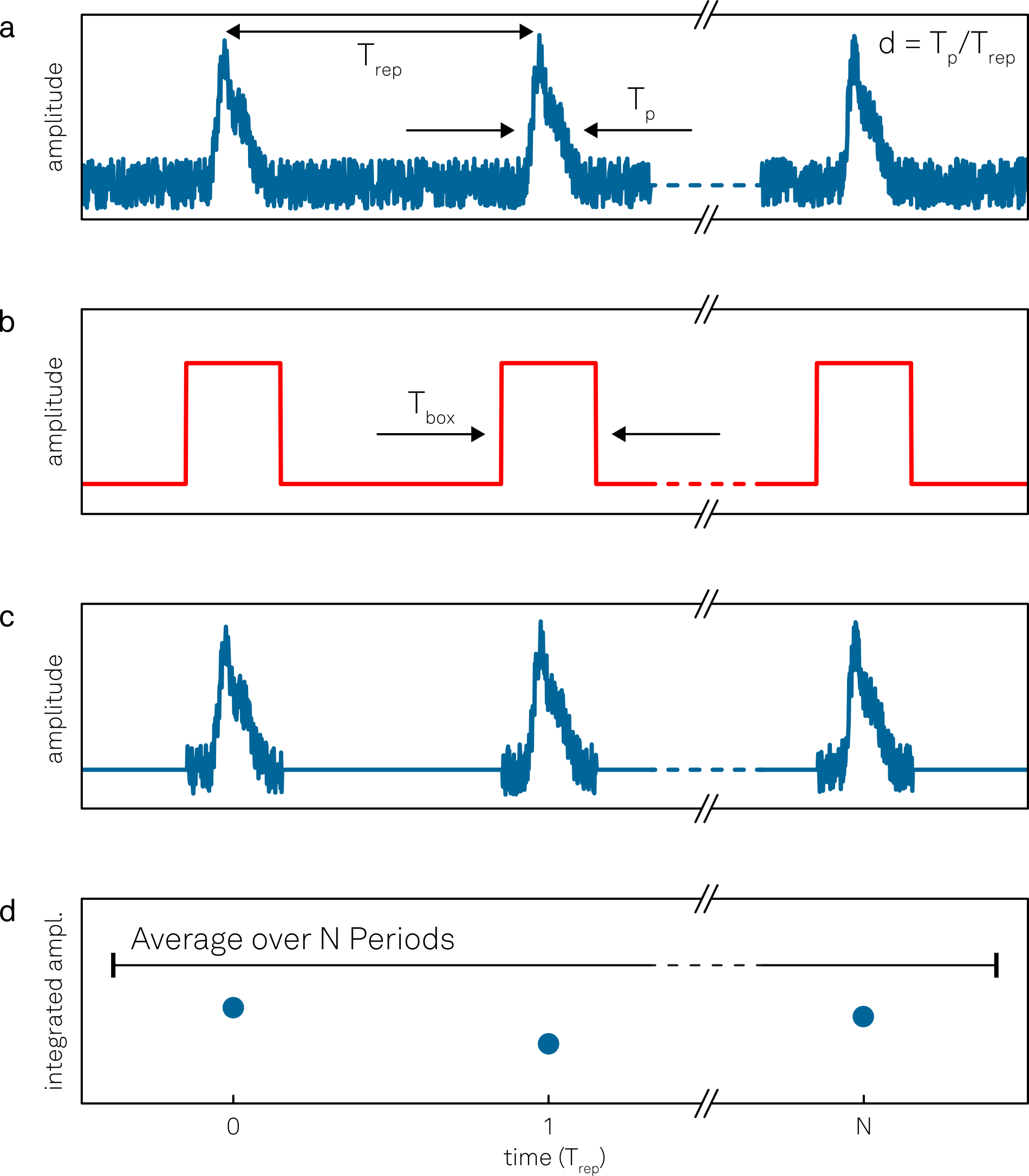
While lock-in amplifiers are ideal for analyzing sinusoidal signals and extracting specific components of a frequency spectrum, boxcar averagers are the tool of choice for low-duty-cycle signals (see figure). A typical input signal from a pulsed experiment has a pulse width Tp, repetition period of the pulses Trep, and duty cycle d. In boxcar averaging, the input signal is multiplied with a boxcar function, also know as rectangular pulse train, with pulse width TBox. In this way, noise contributions outside of the boxcar window are rejected (see panel c). Inside the boxcar gate, signal integration results in a single value per period later averaged over N periods.
Data extraction from low-duty-cycle signals requires information from the base frequency and many higher harmonics simultaneously. To capture this additional information, boxcar averagers need a signal input bandwidth that is many times larger than the base frequency, so that setting up a boxcar measurement requires careful control of more parameters compared to a lock-in measurement. The payoff usually comes in the form of shorter measurement times and higher SNR, which can make a big difference in areas such as imaging. Therefore, lock-in measurements and boxcar measurements are complementary tools for analyzing periodic signals.
Take a look at our white paper for a more in-depth discussion of the principles of boxcar detection.
The digital VHF-BOX Boxcar Averager offers many advantages over analog boxcar averagers:
| Feature | Analog boxcar | VHF-BOX |
| Insensitivity to trigger jitter | no | yes |
| Rectangular boxcar window to avoid artifacts | no | yes |
| Intermediate results for smooth operation of feedback loops | no | yes |
| Measurement of non-periodic signals | yes | no |
| Graphical user interface | no | yes |
| Flexible reference window | no | yes |
| Maximum number of averaging periods | 10k | 1M |
| Maximum repetition rate for dead-time-free operation | < 50 kHz | up to 200 MHz |
In addition, the VHF-BOX Boxcar Averager can operate in conjunction with other functionalities offered by the VHFLI Lock-in Amplifier; for example, by streaming its results to the lock-in unit for further demodulation.