Multi-Device Synchronization (MDS)
Do you have an application that requires multiple synchronized signal input and output channels? If yes, you probably know that stacking a few instruments is often not sufficient.
Full synchronization includes stable and well-defined phase relationships between the various reference clocks, the ability to synchronize the signal outputs at defined times, and the alignment of time stamps and sampling rates for the recorded signals. The ideal solution is a single user interface or API orchestrating the entire instrument assembly.
Zurich Instruments is committed to providing a comprehensive approach to measurement instrumentation with scalability in mind. LabOne® enables multi-device synchronization (MDS) for up to 8 instruments, and allows users to access them through a single graphical user interface and API session.
MDS Key Features and Operating Principle
- Clock synchronization of all instruments to one master clock
- Synchronized time stamps and sampling rates of measurement data
- Sample-wise synchronization of all output channels
- MDS module in LabOne to measure multiple devices simultaneously
- AWG linked mode to control the output of several AWG instruments from one single sequencer program with distributed execution
Example: multi-channel measurement automation with the Sweeper tool
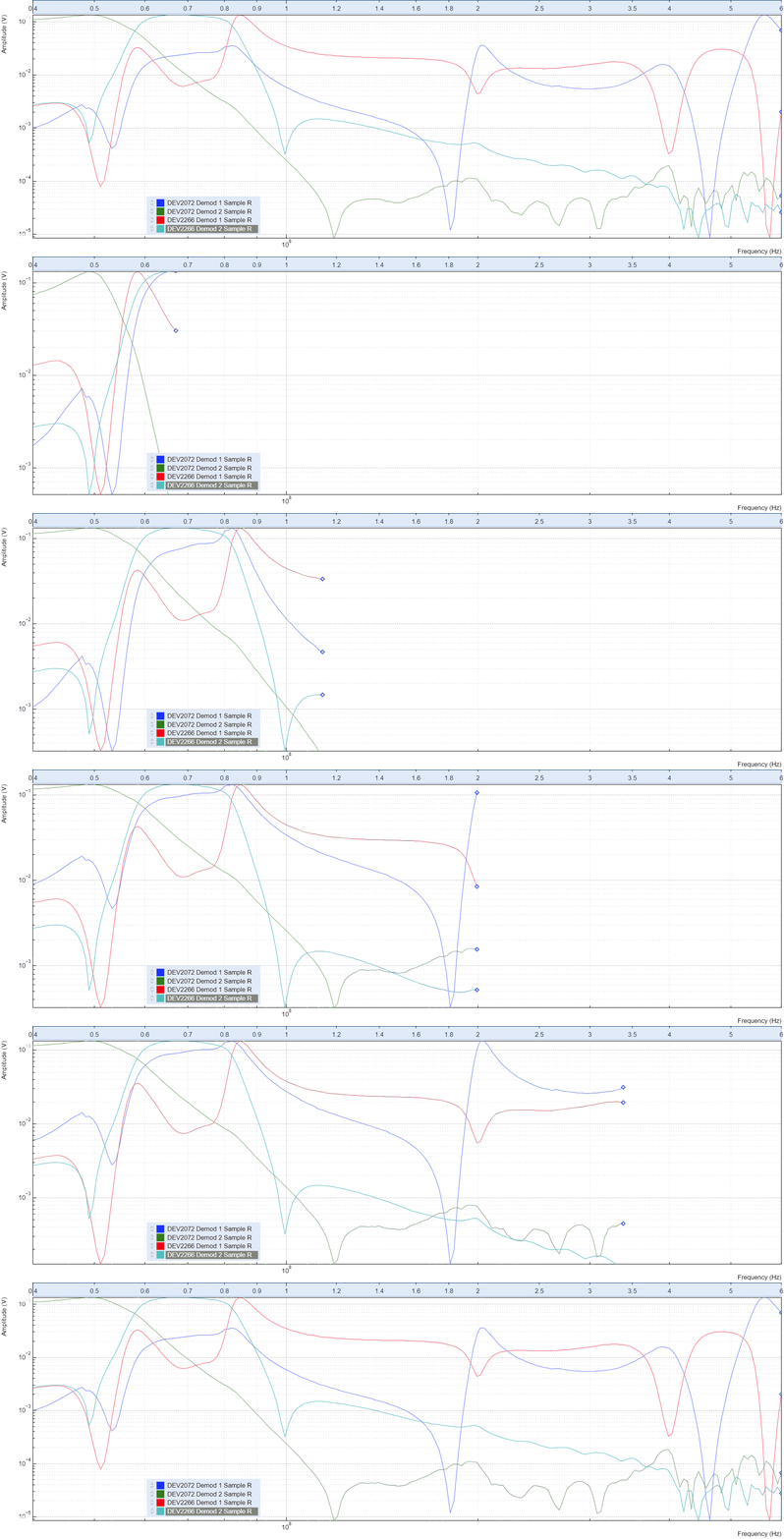
Simultaneous measurement of several input signals facilitates and improves the characterization of multi-port networks. In order to obtain the frequency response of a multi-port network, one port is excited and all other ports (including the driven one) are measured. With the Sweeper tool enhanced by the MDS module, it is possible to measure the complete frequency response of a complex multi-port network in one sweep displayed by a single LabOne user interface or LabOne API session controlling several instruments. The figure below shows the frequency response of a 4-port network measured in a single sweep with two synchronized UHFLI Lock-in Amplifiers.
All involved instruments share the same 10-MHz reference clock to have a common clock speed. All instruments also need to be connected in a chain of trigger signals. By starting the MDS, LabOne executes the following sequence of steps:
- Adjust the reference clock of the slave instruments to the master clock or to an external source.
- Identify the position of each instrument in the chain of trigger signals.
- Measure the cable delay between instruments.
- Adjust the clock in each instrument while taking into account the measured cable delays.
At the end of the sequence all instruments have the same clock time, i.e., synchronous time stamps of individual samples.
Applications
Every application requiring multi-channel signal generation and/or detection may benefit from MDS, especially when multi-channel signals must be generated and/or measured synchronously. This applies to the following research areas and techniques:
- Multi-qubit quantum computing
- NMR measurements
- Multi-sensor measurement systems, e.g. Hall effect material characterization and sensing
- Multi-channel boxcar averaging
- Multi-point impedance technique in microfluidics
- Phased-array radars
- Noise reduction by cross-correlation
MDS-enhanced LabOne features
- Sweeper: Scan a parameter for one instrument and measure the response over multiple channels and instruments in a way that is fully synchronized with the sweep parameter changes.
- DAQ: Measure time-domain signals and record images based on trigger signals across multiple instruments with accurate sample alignment.
- Plotter: Display signals from multiple instruments simultaneously with time-stamp alignment.
- Spectrum: Compare signal spectra from various instruments.
Supported Instruments
It is possible to synchronize multiple instruments from the same series. Each platform has its own cable configuration for reference clock and trigger signals.
MFLI/MFIA
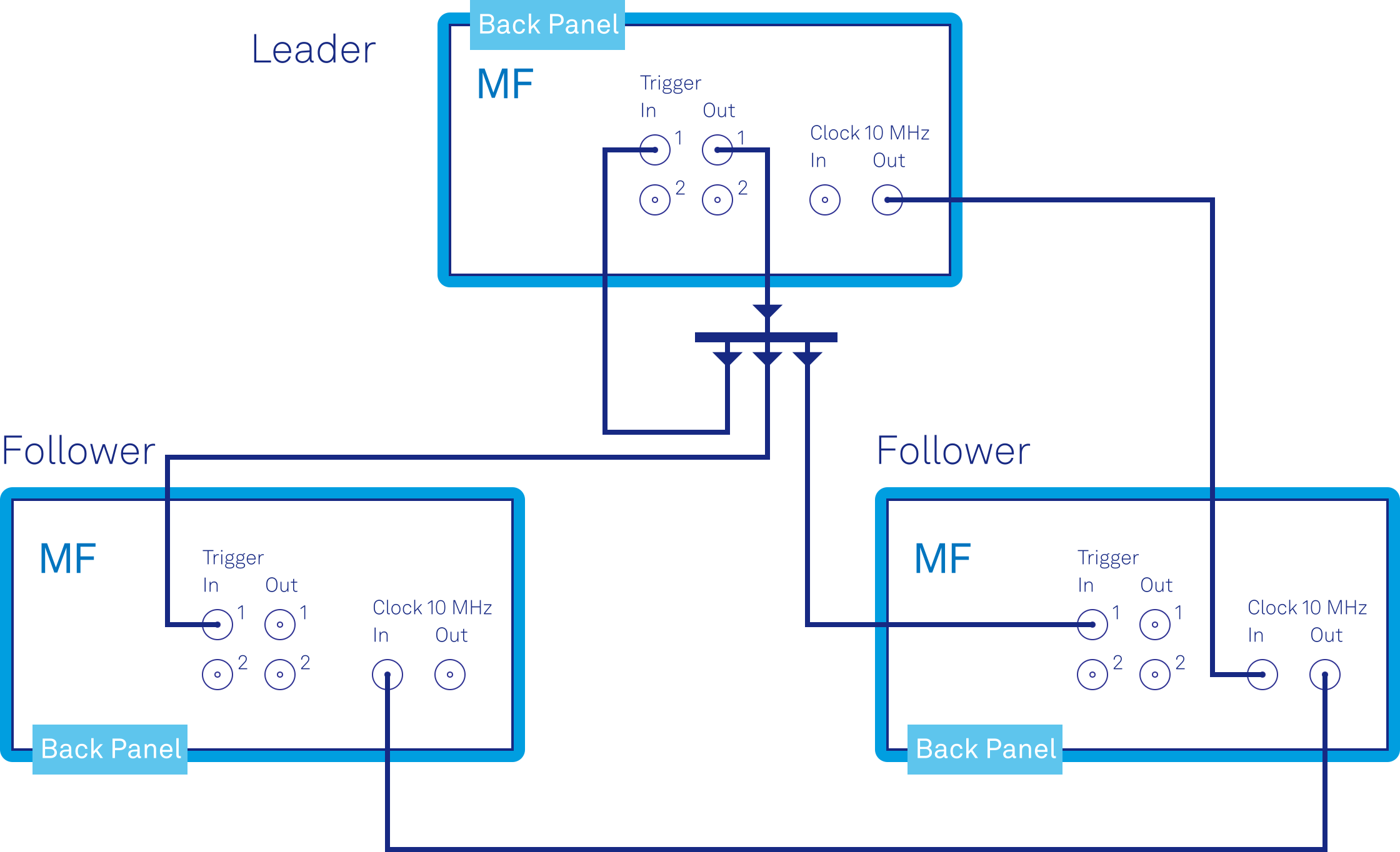
Multiple MFLI Lock-in Amplifiers and/or MFIA Impedance Analyzers can be synchronized by connecting the 10 MHz clock output of one instrument to the next one. One instrument acts as the master trigger source, from which trigger signals are then distributed to all other instruments including the master (see diagram).
| Port | Config | Connector |
|---|---|---|
| Trigger In/Out | Star | BNC |
| 10 MHz Clock | Series | BNC |
HF2LI
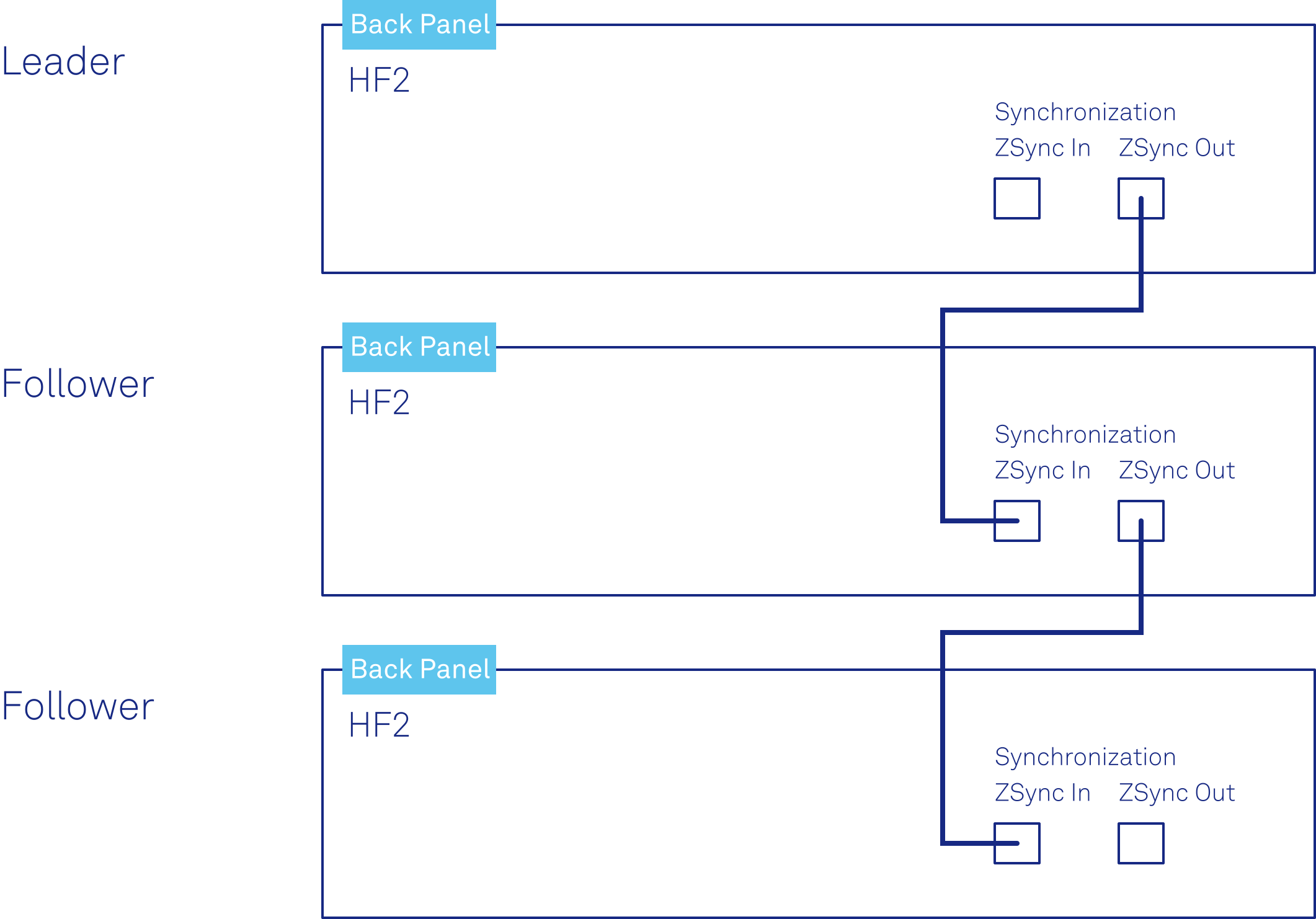
The HF2LI Lock-in Amplifier has a specific signaling for synchronization based on RJ45 connectors to share trigger and clock signals (see diagram).
| Port | Config | Connector |
|---|---|---|
| ZSync In/Out | Series | RJ45 |
UHFLI/UHFAWG/UHFQA
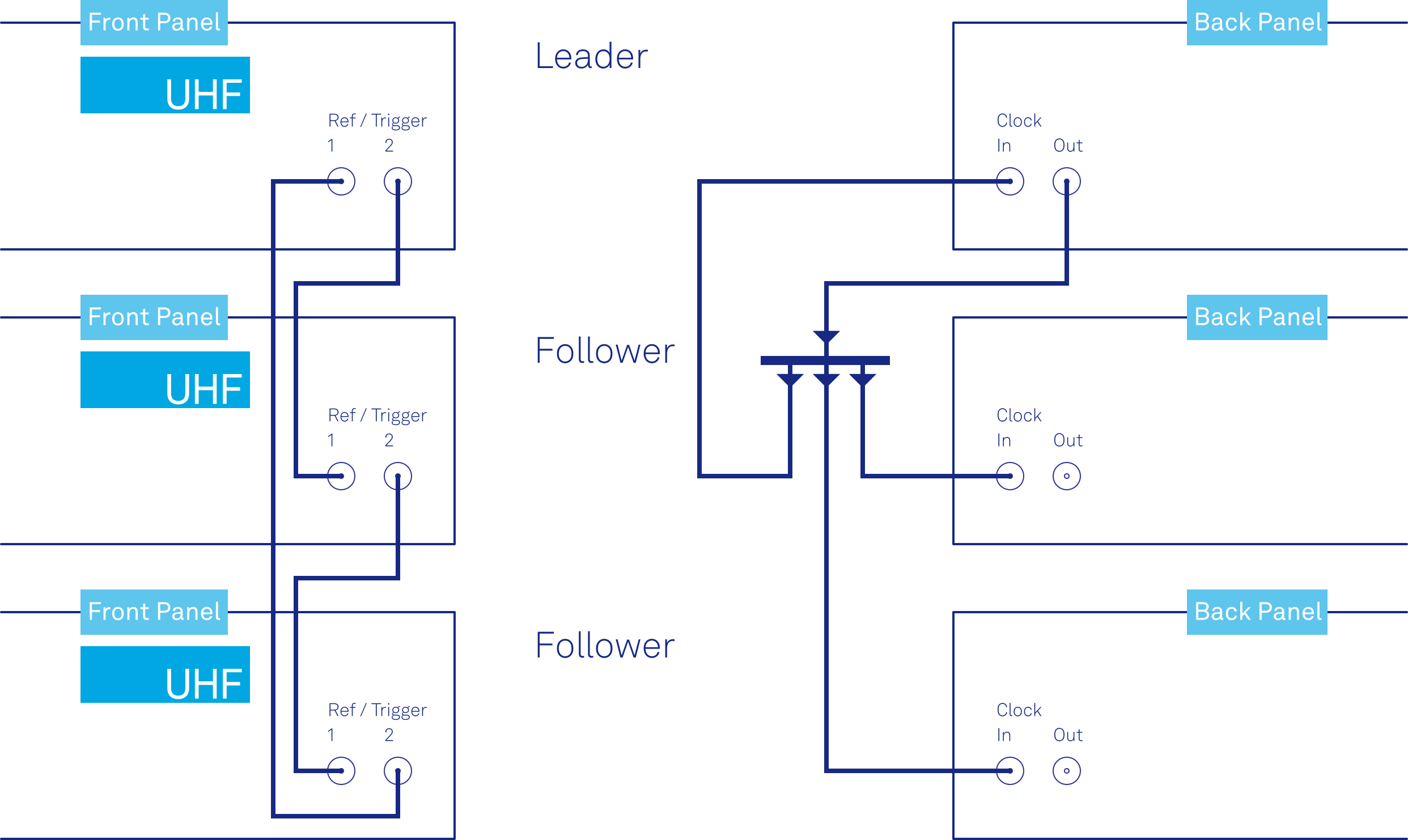
On the UHF platform, MDS can bring considerable benefits as the instrument has both the AWG and lock-in functionalities. The clock signals are distributed in a star-like fashion, with one instrument acting as the master (or, alternatively, using an external 10 MHz reference clock): the trigger signals are then shared through a loop including all instruments (see diagram).
| Port | Config | Connector |
|---|---|---|
| Ref/Trigger | Loop | BNC |
| 10 MHz Clock | Star | SMA |
HDAWG
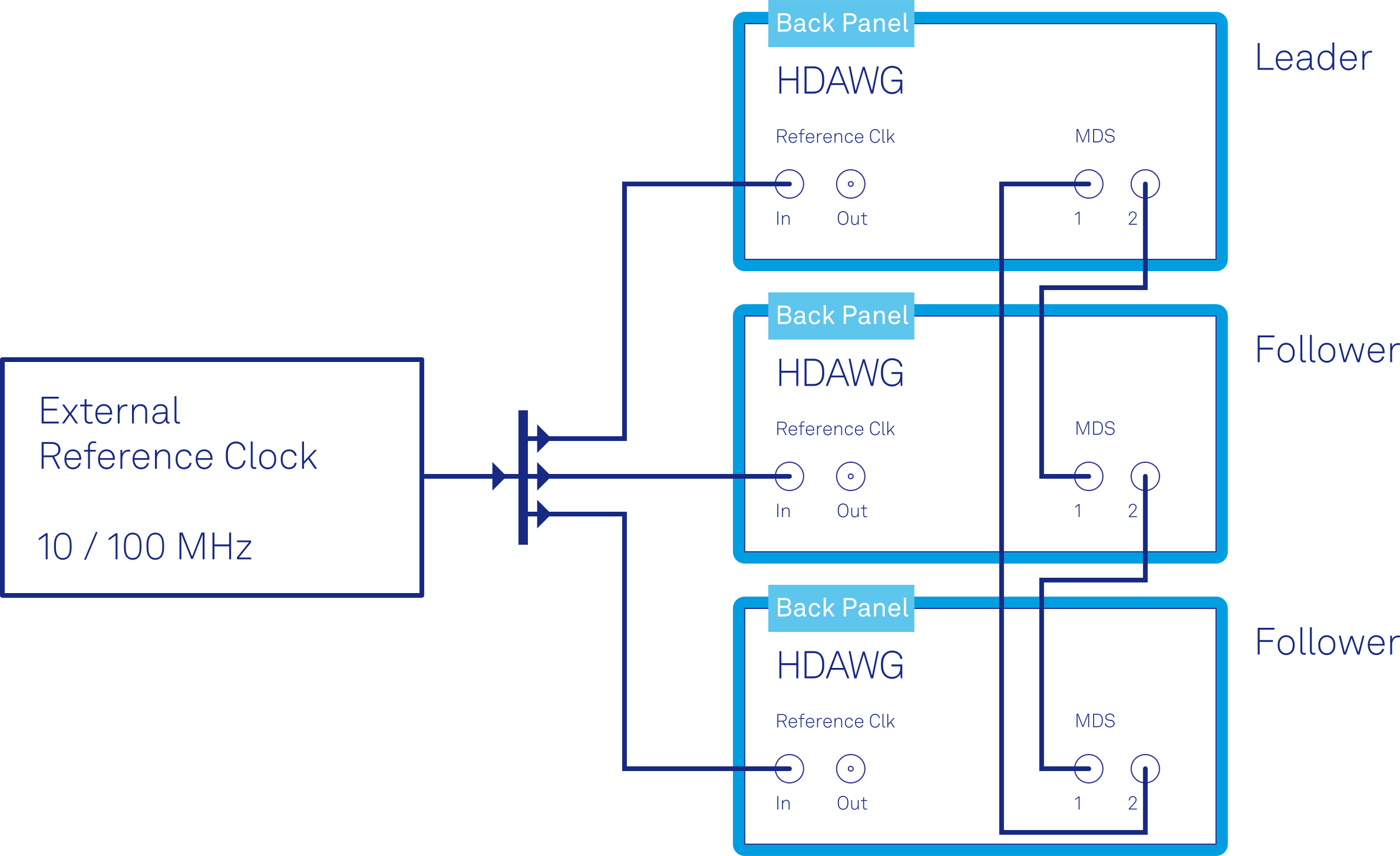
Up to 8 HDAWG Arbitrary Waveform Generators (corresponding to 64 AWG channels) can be synchronized using MDS. The 10/100 MHz clock is distributed in a star-like fashion thanks to an external clock source. Time-stamp synchronization is achieved through a loop that includes all instruments and makes use of specific MDS trigger ports (see diagram). Synchronizing more than 64 channels requires the PQSC Programmable Quantum System Controller.
| Port | Config | Connector |
|---|---|---|
| MDS 1/ 2 | Loop | SMA |
| 10/100 MHz Clock | Star | SMA |
MDS Q&A
MDS Specifications
| MFLI/MFIA | HF2LI | UHFLI/UHFAWG | HDAWG | |
|---|---|---|---|---|
| Number of devices | Up to 8 | Up to 4 | Up to 8 | Up to 8 |
| Time precision | < 10 ns | < 200 us | < 1 ns | < 1 ns |