Winners of the Student Travel Grants 2026

A big thank you to everyone who applied for the 2026 Student Travel Grant. This year, 88 students shared their research with us, and we’re grateful to each of you for letting us see what you’re working on. Your submissions spanned quantum computing, materials science, biosensing and even geothermal monitoring, and it was a pleasure to see so many different paths of research.
Much like previous years, applications were received from a wide range of disciplines and geographic regions. Following an eligibility review, a random selection was used to choose one recipient per region, ensuring fairness and transparency
This year's winners are:,
Frederik Pfeiffer (Walther-Meißner-Institut and Technical University of Munich, Germany), A high-fidelity two-qubit gate for multimode superconducting P-mon qubits, arXiv:2606.24772 (2026).
Featured Instrument: SHFQC, HDAWG Arbitrary Waveform GeneratorLorenzo Graziotto (Columbia University, USA), Cavity quantum electrodynamics control of quantum Hall stripes, Nature Physics: 10.1038/s41567-026-03287-3 (2026). Control of Quantum Hall Phases with Cavity Vacuum Fields, PhD thesis, ETH Zurich (2026).
Featured instrument: MFLI Lock-in AmplifierShinichi Inoue (RIKEN, Japan), Parametrically Driven iSWAP Gate Using a Capacitively Shunted Double-Transmon Coupler at the Zero-Flux Sweet Spot, arXiv:2606.24772 (2026).
Featured instrument: SHFQC+, HDAWG Arbitrary Waveform Generator, PQSC
They will be able to spend their individual prizes of 1'500 CHF on conference fees, textbooks or online courses.
Below, this year’s recipients share a little about their research and their experience setting up and running their experiments. Thinking of applying in 2027? Sign up here to be notified when the call opens so you have plenty of time to prepare.
Learn more about the winners' research here:
Frederik Pfeiffer (Walther-Meißner-Institut and Technical University of Munich, Germany)
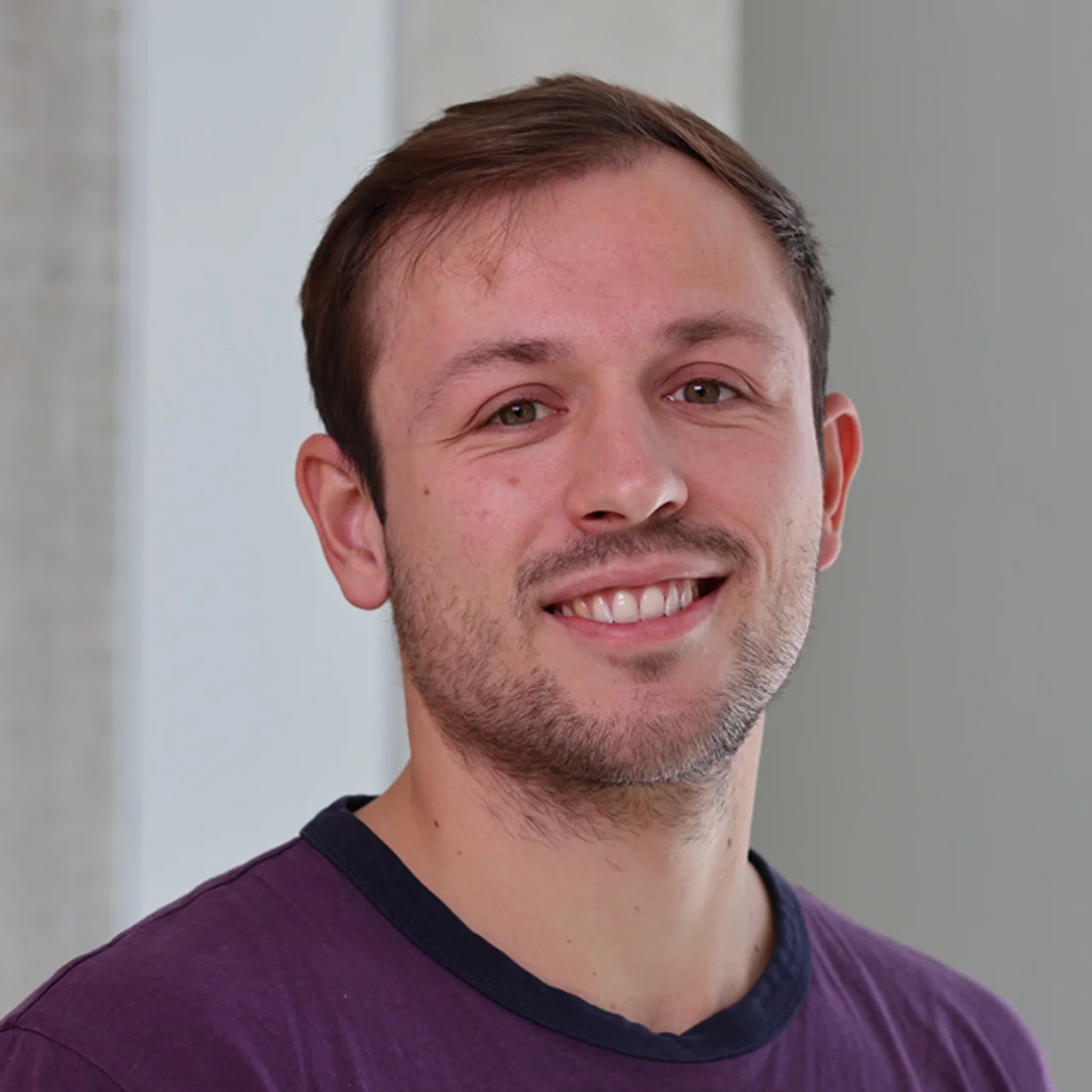
I first learned about Zurich Instruments when I joined the quantum computing lab at the Walther-Meißner-Institut, where we use their instruments for most of our experiments.
In my research, I use the SHFQC+ to generate microwave pulses for high-fidelity single-qubit gates, two-qubit gates, and readout in a novel superconducting qubit architecture we are developing. For flux control, we use the HDAWG, which makes it easy to generate flux pulses with high bandwidth.
What I particularly like about the SHFQC+ is the integration of signal generation and measurement in a single instrument, which makes our experimental setup easier to use. I also like that I don’t have to worry about mixer calibrations and unwanted sidebands.
Frederik Pfeiffer (Walther-Meißner-Institut and Technical University of Munich, Germany), A high-fidelity two-qubit gate for multimode superconducting P-mon qubits, arXiv:2606.24772 (2026).
Featured Instrument: SHFQC, HDAWG Arbitrary Waveform Generator
Lorenzo Graziotto (Columbia University, USA)
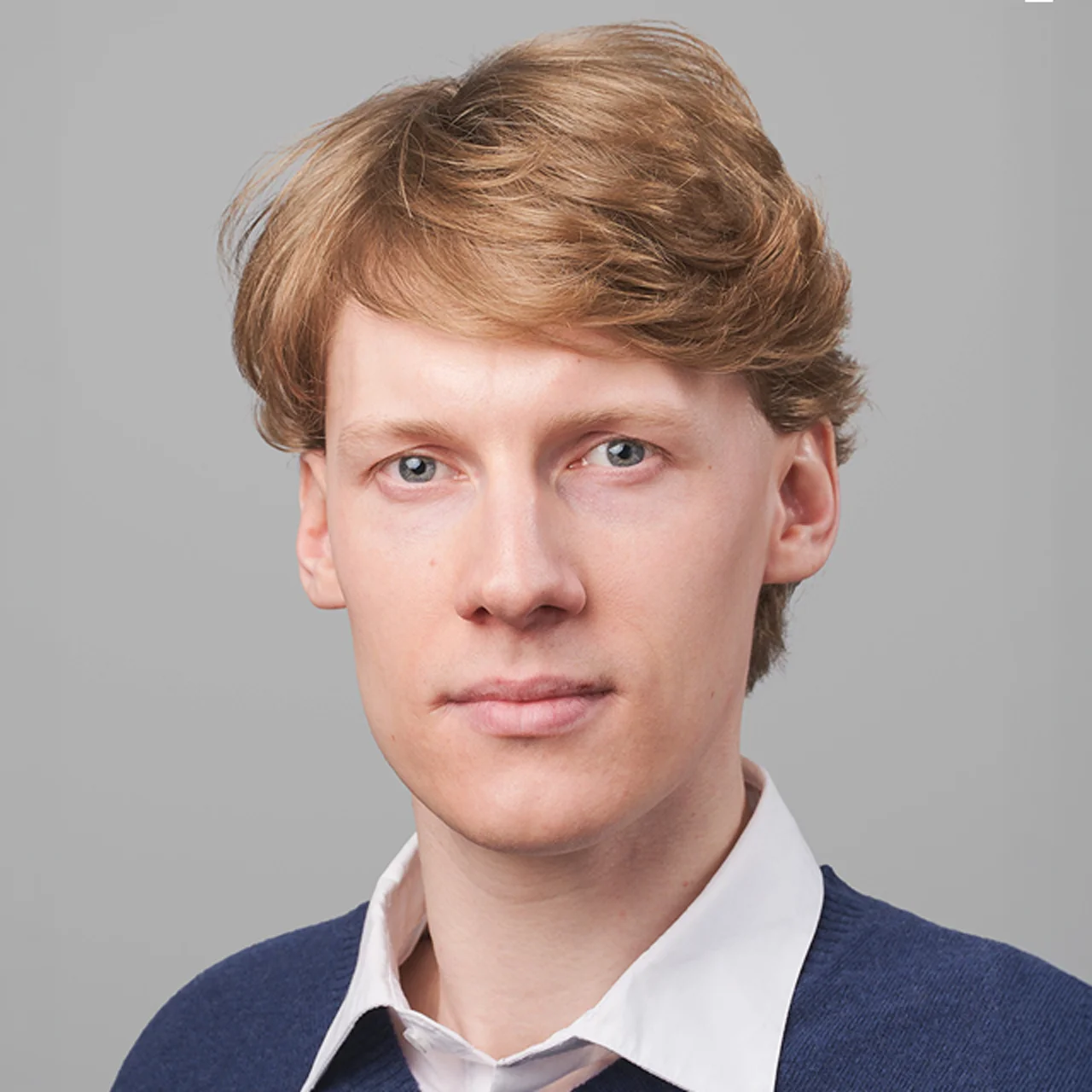
The Zurich Instruments MFLI 500 kHz digital lock-in amplifiers have been the workhorse for all the transport measurements I performed during my 5-year PhD at ETH Zürich, under the supervision of Prof. Jérôme Faist and Prof. Giacomo Scalari. Because we wanted to measure the longitudinal and transverse resistance of multiple Hall bar devices simultaneously at mK temperatures and during the same magnetic field sweep, we relied not on one, but on 7 daisy-chained lock-ins. For this, the ability to synchronize multiple MFLIs to the same detection phase was crucial to ensure the reproducibility of our measurements. Even more importantly, my PhD research aimed at demonstrating the effect of electromagnetic vacuum fluctuations on transport in the quantum Hall regime: having an extremely low-noise detection device such as the MFLI enabled us to showcase these tiny effects. I loved the ease of use of the MFLI interface with the LabOne software, and also the availability of Python APIs to interface the instrument with our custom-made code. Finally, I am grateful for the fast and precise support Zurich Instruments' team has always provided when we needed it.
Lorenzo Graziotto (Columbia University, USA), Cavity quantum electrodynamics control of quantum Hall stripes, Nature Physics: 10.1038/s41567-026-03287-3 (2026). Control of Quantum Hall Phases with Cavity Vacuum Fields, PhD thesis, ETH Zurich (2026).
Featured instrument: MFLI Lock-in Amplifier
Shinichi Inoue (RIKEN, Japan)
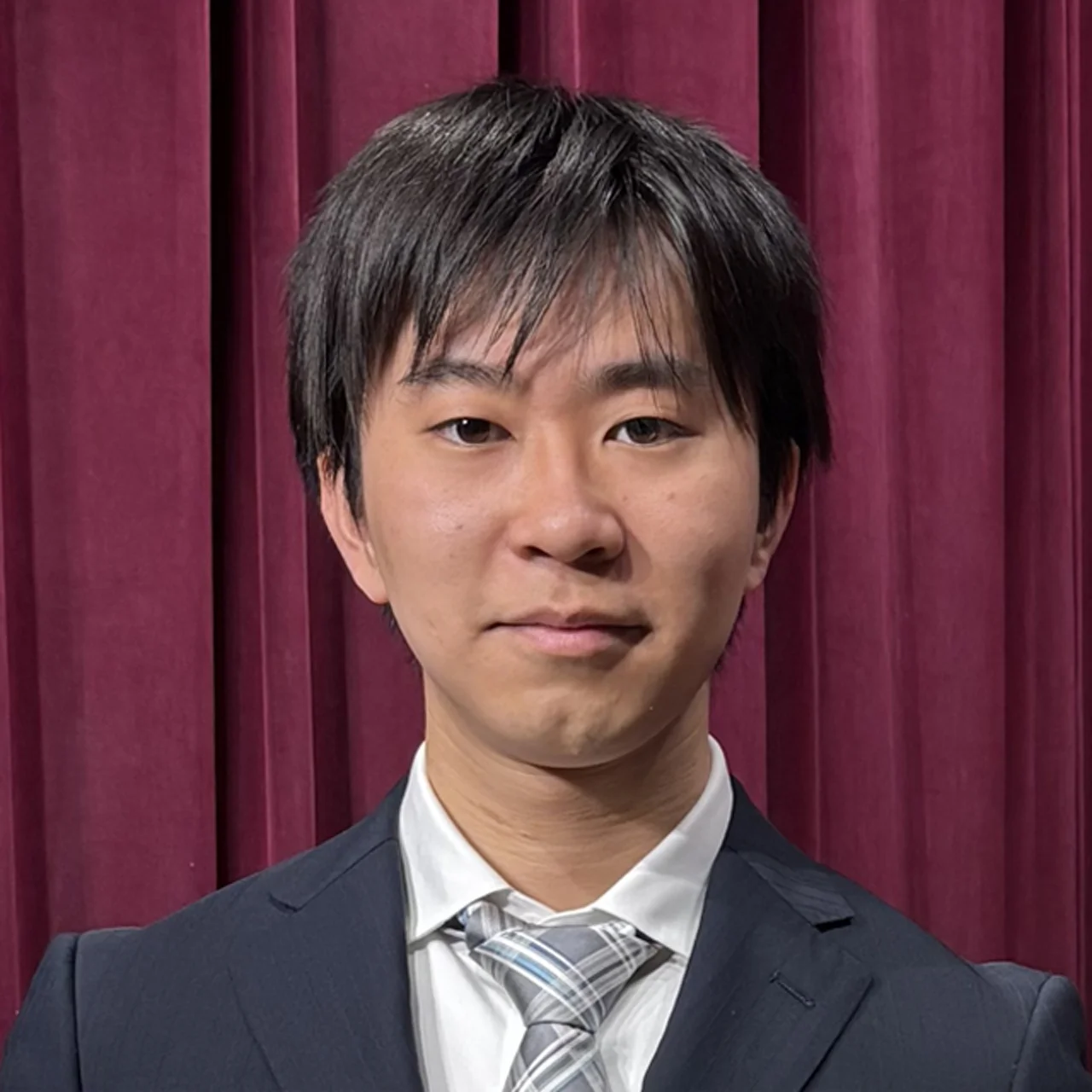
I first learned about Zurich Instruments and its SHFQC+ from a postdoctoral researcher in our group who was using the system at the time.
The ability of the SHFQC+ and HDAWG to generate precise waveforms, as well as their ability to maintain timing synchronization over a long period of time through the PQSC, has helped me achieve high-fidelity quantum operations in our work.
In addition, I particularly appreciate the seamless integration of these instruments through the LabOne Q API, which allows me to define waveforms and pulse sequences intuitively in Python and run complex experiments smoothly without having to deal with hardware APIs.
Shinichi Inoue (RIKEN, Japan), Parametrically Driven iSWAP Gate Using a Capacitively Shunted Double-Transmon Coupler at the Zero-Flux Sweet Spot, arXiv:2606.24772 (2026).
Featured instrument: SHFQC+, HDAWG Arbitrary Waveform Generator, PQSC